echoes
Fragments in Minor Keys
INTER-REALITY
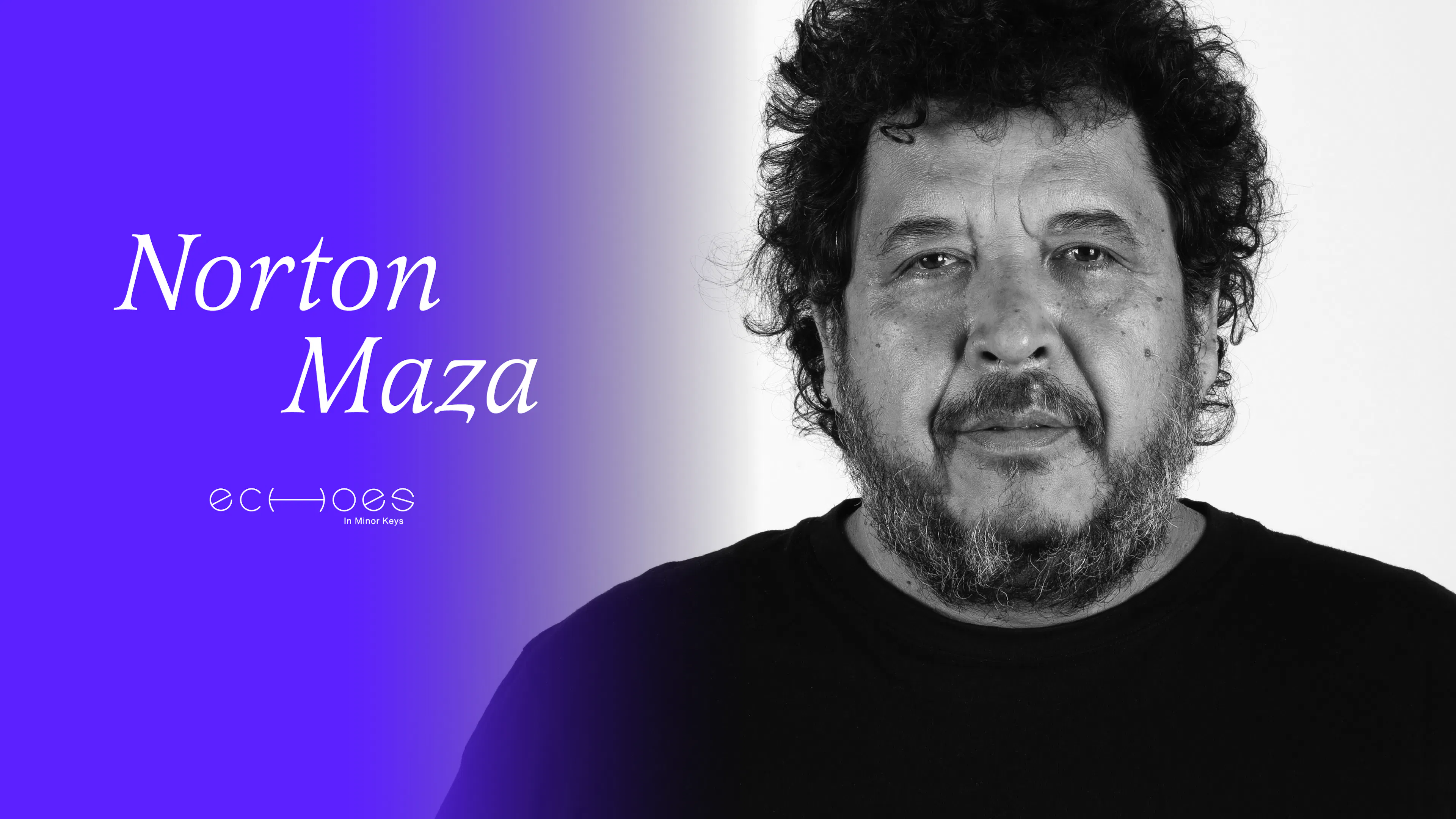
A Conversation with Norton Maza
Chile Pavilion, Venice Biennale 2026
Norton Maza — A conversation with Francesca Carol Rolla
Venice, 2026

Photo credits © Juan Carlos Gutierrez
With Inter-Reality, presented at the Chile Pavilion at the 2026 Venice Biennale, Norton Maza approaches reality as an unstable construction: fragile, layered, and continually rewritten by perception, memory, belief, and illusion.
From the outside, the installation asserts itself as a monumental, white, opaque, almost cold presence. Yet its apparent solidity gradually opens up, revealing a constellation of inner worlds. The viewer is invited to choose how to enter into relation with it: to approach, move around it, pass through it, or remain at its edges, altering the experience of the work through their own body and sense of time.
Inside, images, scales, sounds, and materials bring childhood, exile, displacement, and belonging to the surface, composing a geography that is at once intimate and political. Emerging from Chile without being reduced to a representation of it, Inter-Reality opens onto a hybrid and unstable perceptual space, where what initially seemed familiar is gradually transformed through the discovery of unexpected details, worlds, and layers, asking the viewer to continually reconsider what they thought they had already understood.
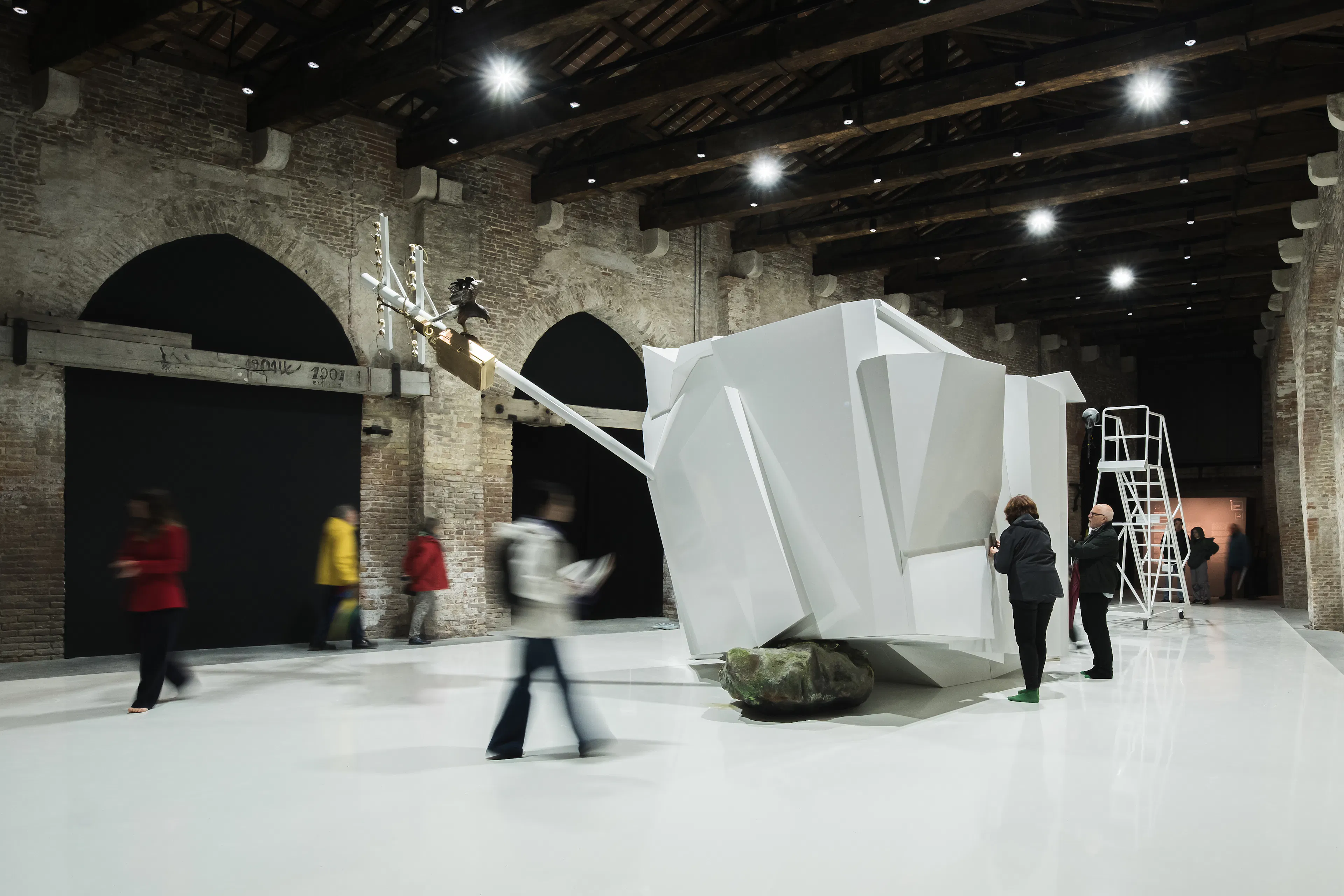
Photo credits © Alvise Busetto
Francesca Carol Rolla:
Inter-Reality stages reality as an unstable, layered, and continually negotiated construction, traversed by perception, memory, information, illusion, and violence. Within the work, what we call reality never appears as a unified given: it is composed through overlaps, discontinuities, interferences, and competing versions of the world. Which forms of this instability were you interested in making perceptible, and which political, cultural, media, or symbolic mechanisms through which reality is constructed, legitimized, or erased did you want to bring into relation?
Norton Maza:
The work is not trying to assert a single reality. I am more interested in making its instability visible.
Today, we are constantly losing our points of reference. It happens through the media, through information, through interconnectedness, but also through political, economic, or religious constructions. Versions of the world are produced that end up imposing themselves over others and, very often, erasing them.
At that point, it becomes difficult to understand what we can really rely on, what is actually happening, what is real, what is being manipulated, and what is being constructed from outside.
When the viewer enters the work, they enter a territory that differs from the one they are accustomed to, and begin to encounter another configuration of reality.
But this too is never singular: it opens onto different layers of interpretation, some more immediate, others more complex, symbolic, and associative.
I am interested in the viewer constructing their own path through objects, scales, sounds, symbols, materials, and distances. Nothing is closed or predetermined: what we call reality takes shape at the moment when the body enters, looks, approaches, hesitates, interprets.
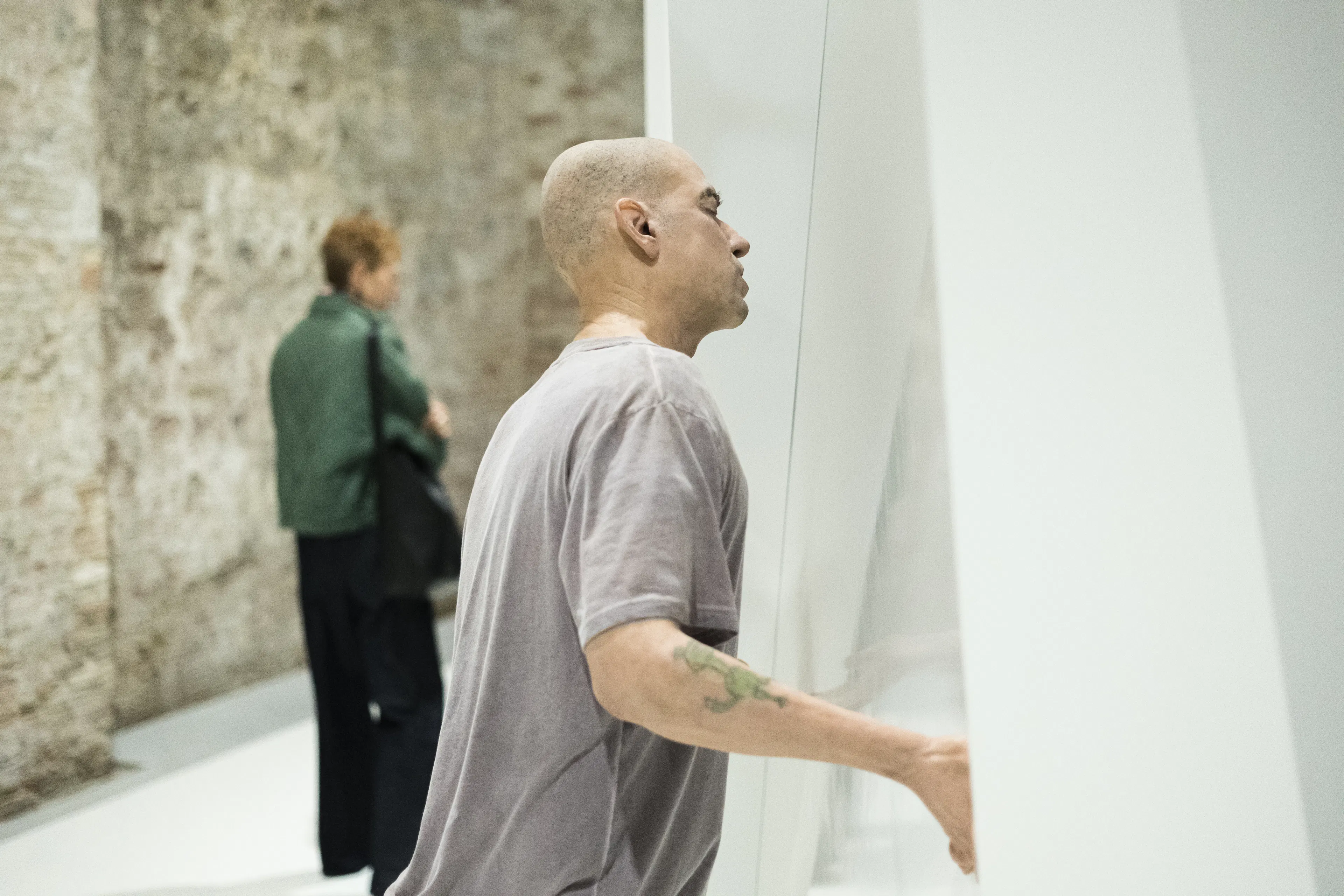
Photo credits © Alvise Busetto
FCR:
In Inter-Reality, the viewer never occupies a neutral position: their presence seems to become one of the conditions through which the work is activated and takes form. Bodies approach, pause, bend, search for openings, alter their rhythm and point of view. In doing so, they also transform the relationship between space, time, and perception. How did you conceive of the viewer’s body as an integral part of the work’s apparatus, and what kind of relationship did you want to generate between presence, movement, and perceptual construction?
NM:
The work is only truly complete when the viewer enters into relation with it.
There is a moment when the body comes so close that it almost adheres to the structure, like a remora attaching itself to the body of a fish or a whale. The viewer looks through the openings, approaching until there is contact with the aluminum: skin against metal, the eye against a small opening, the body against the structure.
From that moment on, the work is no longer simply something to be observed from the outside. The viewer enters the installation, moving around it, bending down, changing posture and point of view, stepping away and then returning to look again.
Sometimes a queue forms as people take off their shoes before entering. At other times, they circulate around the work almost like predators circling their prey. They bite it with their eyes.
That is what interests me: the visitor becomes part of an organic system.
The work breathes differently when someone approaches it, enters barefoot, peers inside, and discovers something they were not expecting.
At that point, looking is no longer only a visual act: it becomes a physical, perceptual, and emotional relationship with the work.
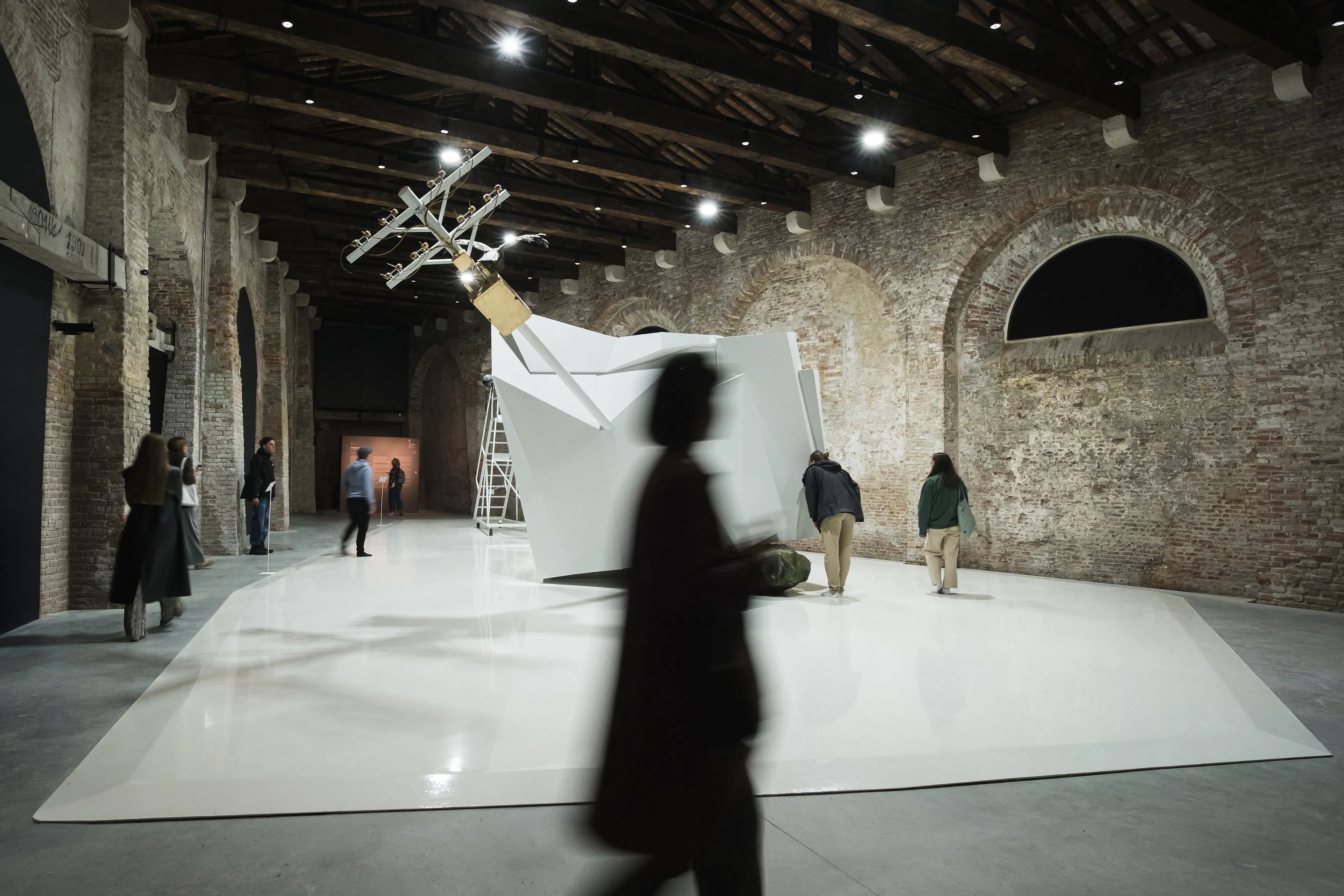
Photo credits © Alvise Busetto
FCR:
In Inter-Reality, perception is never immediate or passive: it involves a series of choices, thresholds, and bodily adjustments. Approaching, removing one’s shoes, lowering one’s gaze, accepting another scale, another rhythm, and another temporality also means altering one’s way of inhabiting space and of constructing what one perceives. How does this perceptual transformation become, for you, a form of positioning — and therefore a political stance?
NM:
Perception is always connected to a position in relation to what surrounds us.
We walk and we are already making decisions: we choose one path rather than another, decide whether to approach, enter, or remain at the margins, whether to observe from a distance or come into direct contact with the structure.
In Inter-Reality, some people remain outside, while others enter barefoot and feel the surface through contact with the ground. That is when perception becomes bodily: it no longer passes only through the gaze, but involves the body, its balance, its way of orienting itself in the space.
That change in posture is important. The viewer has to shift down a gear, to slow down and adapt to the time of the work, rather than the other way around.
That is where the political dimension emerges: in taking a position, in deciding how to move through the installation, and how to enter into relation with a constructed reality.
Perception is never neutral. It always implies a way of being in the world.
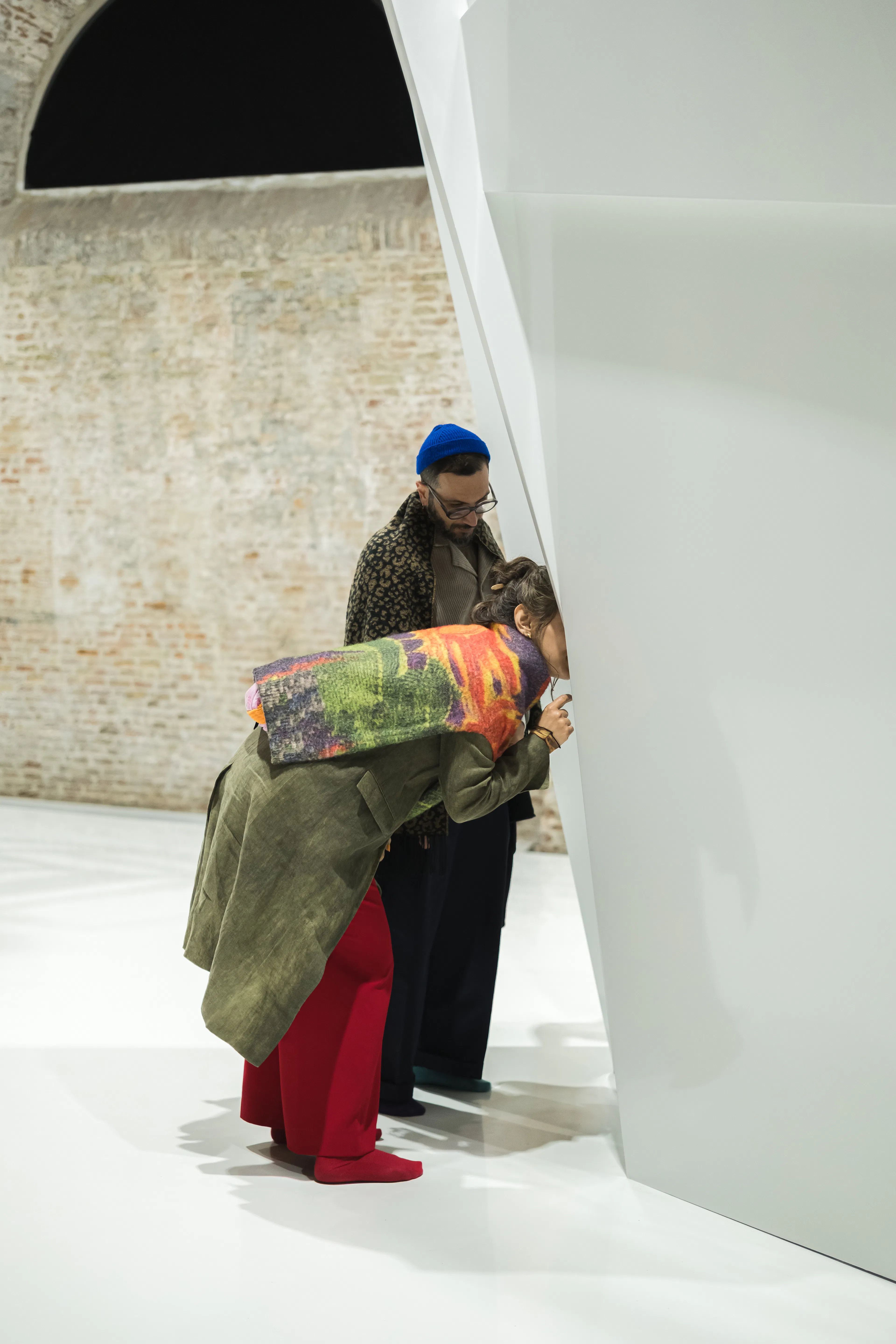
Photo credits © Alvise Busetto
FCR:
In Inter-Reality, illusion does not function as escape, but as an unstable construction that exposes its own conditions: visible artifices, precarious balances, and simple materials coexist with a monumental, cold, and highly controlled appearance. How does this tension between what appears solid and what remains vulnerable to interruption allow illusion to become, not an escape from reality, but a means of making its fragility perceptible?
NM:
Illusion has always been very present in my work and, for me, it is deeply connected to fragility.
I think this also comes from my personal history. I changed home, country, and place many times. Exile, movement, displacement. I spent years at boarding school, and my life was reduced to very few things: a bunk, a bed, a locker. That was everything I had.
When you move so much, when the idea of home is never truly stable, illusion becomes a way of constructing a possible place, even if only provisionally.
For that reason, for me, illusion is never merely spectacle. It is always fragile: it can break, expose the mechanism that sustains it, and allow you to glimpse what lies behind it.
The same tension exists within the work. From the outside, it appears sophisticated, cold, industrial, almost monumental. Inside, however, much more precarious elements emerge: cables, adhesive tape, small mechanisms, simple structures, almost artisanal solutions.
That humanizes the work. It makes it vulnerable.
Illusion is born precisely from this contrast between an architectural, controlled exterior and a warm, hidden, organic interior: from the tension between the monumental and the precarious, between technical construction and the modest human artifice.
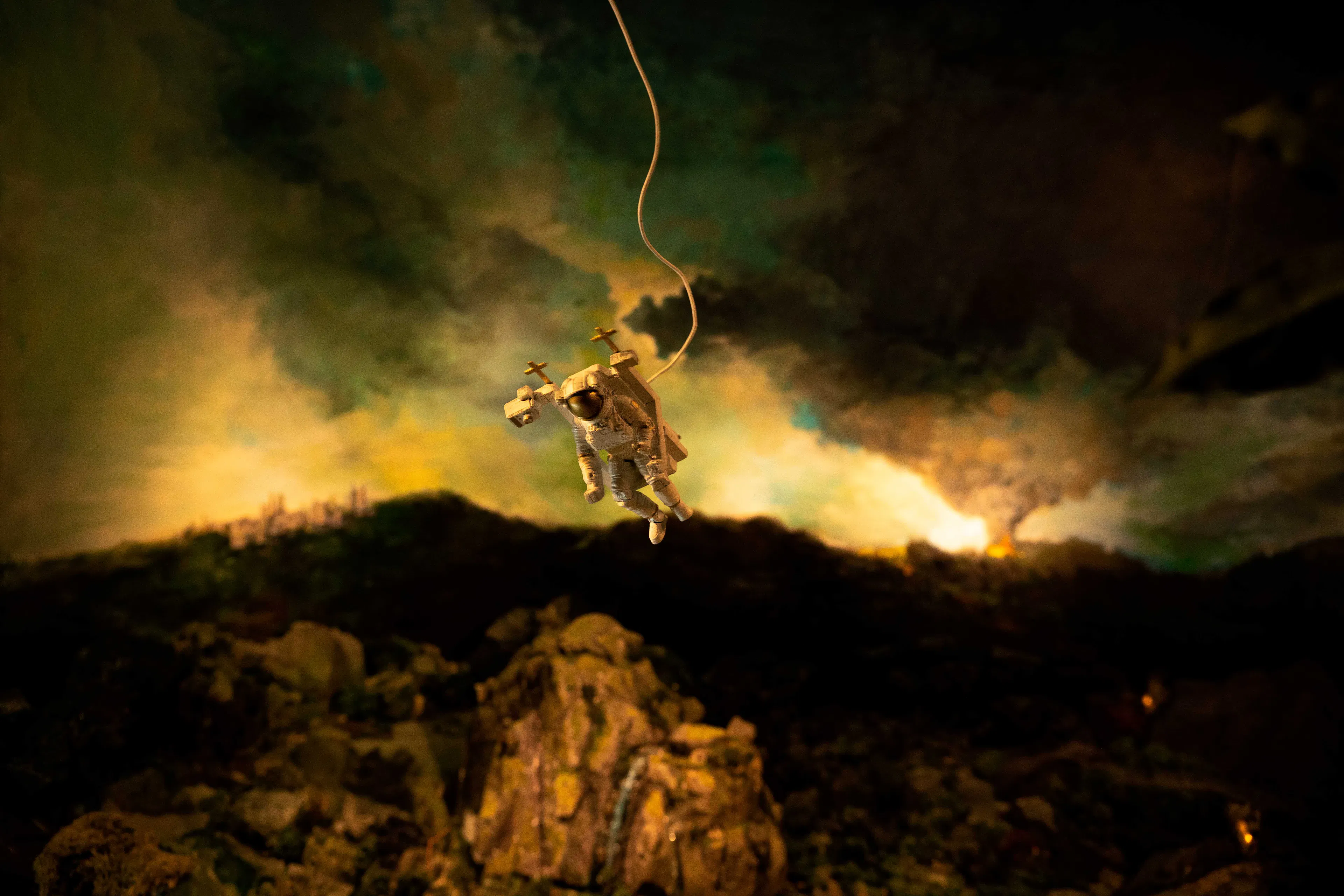
Photo credits © Alvise Busetto
FCR:
Inside Inter-Reality, the monumental scale of the installation is continually reversed into a miniature dimension: dioramas, cavities, secret scenes, and almost theatrical landscapes condense far larger worlds. Painting, the cave, and the museum seem to become devices of wonder, but also places where power, memory, fear, and violence accumulate. What does this reduction in scale make possible for you? And how can the small become a space capable of containing and making perceptible much larger historical, ethical, and political questions
NM:
For me, it was important to create an inverse movement.
From the outside, the work has a contemporary, cold, almost oppressive appearance. But once you enter, another universe appears: warmer, more painterly, closer to the grotto, the cave, the first image.
The museum has always been a place of fascination for me, but also a place of power.
As a child, I went to the Louvre, the first major museum I ever visited. I remember looking at enormous paintings and thinking they were photographs. I would say to my mother, “That isn’t a painting, it’s a photograph.” And she would answer, “No, it’s a painting.” I felt there was a trick, a kind of magic, something nobody had told me about.
Later, I understood that this magic was knowledge: light, shadow, color, composition, technique.
But the museum is also a violent place. It is full of narratives of conquest, colonization, violent mythologies, displaced objects, histories of power. Beauty and violence coexist within it.
That is why I wanted the interior of the work to contain something of the museum, but also something of the cave. A small cavity can contain an entire world. A tiny scene can condense the history of humanity.
The diorama allows the viewer to stop, contemplate, and look again. Some people move through quickly, while others return and begin to discover details: the astronaut Pope, the books, landscapes, lights, machines, miniatures, almost childlike elements that, at the same time, speak to much harsher realities.
Contemplation is fundamental, almost a form of meditation. You contemplate in order to feel and, from there, begin to look differently.
If you move too quickly, the work does not open itself to you.
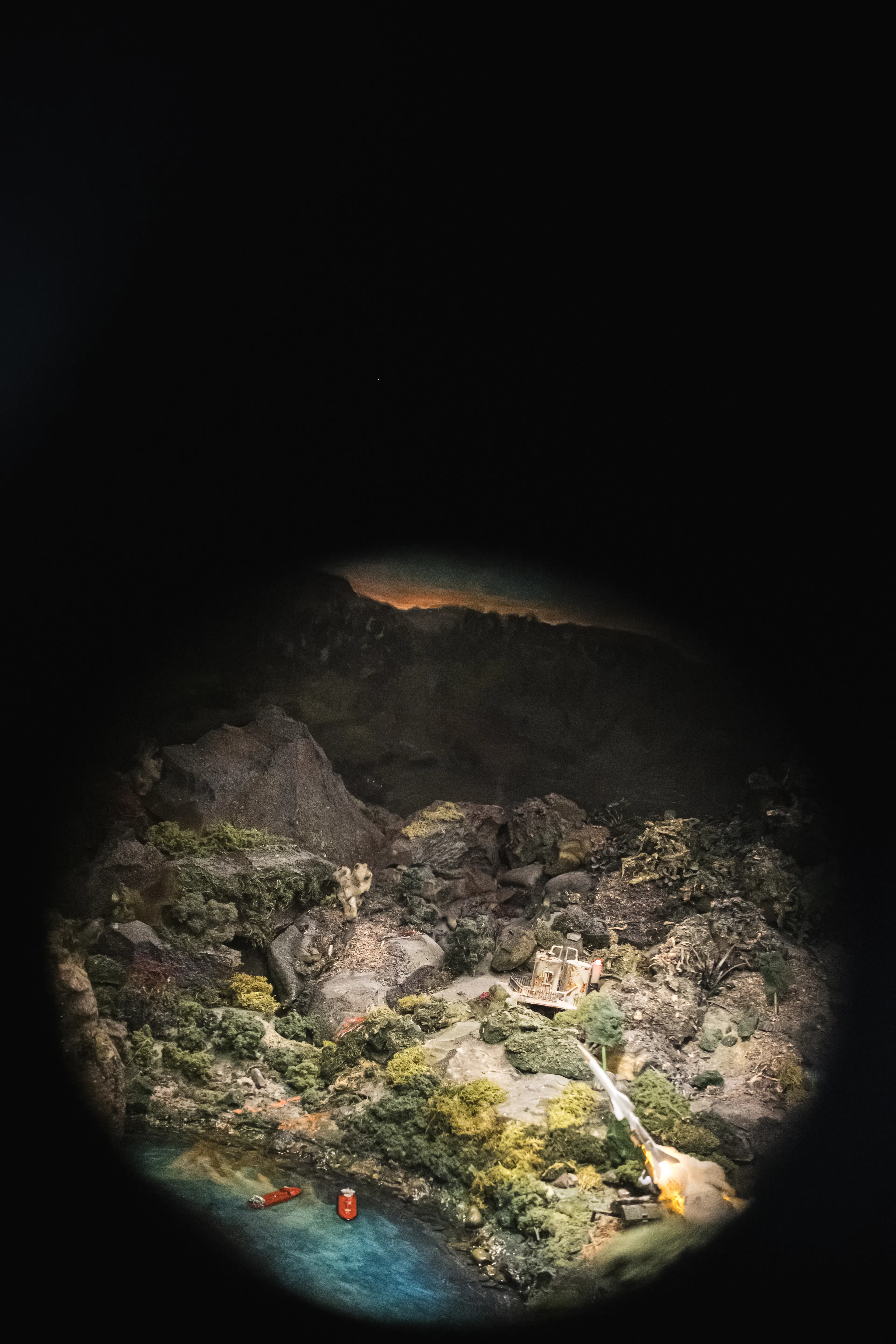
Photo credits © Alvise Busetto
FCR:
Inter-Reality emerges within the context of the Chile Pavilion, yet it avoids translating territory into a single, fixed image of identity. Chile seems instead to emerge as a layering of memories, absences, sounds, cosmologies, violence, and biographical trajectories, inscribed within a personal geography shaped by exile and displacement. How do you work with this tension between belonging and movement, between speaking from a specific place and refusing to reduce it to a closed national representation?
NM:
I do not see Inter-Reality as a literal representation of Chile.
My life has never been rooted in a single place. I experienced exile; I lived in Cuba, in France, in Chile. I was formed by moving through different geographies. For that reason, my gaze does not belong to a closed national identity.
But Chile and South America are always present, not as illustration, but in layers.
There is the Atacama Desert, for example, which appears not only as a Chilean landscape but as a balcony from which to look towards the cosmos, a place from which to observe the universe. That already opens the work towards something that no longer belongs to a single country.
There are also ancestral songs, references to Indigenous cultures, to the Mapuche world, to the Selk’nam, to histories of disappearance, extermination, and genocide. They do not always emerge visibly or literally, but they are there; they surface.
I am interested in creating from a region without reducing it to a postcard. Territory enters the work as memory, wound, sound, absence — as an energy that runs through the entire installation.
FCR:
In Inter-Reality, violence rarely presents itself explicitly: instead, it surfaces through miniatures, shifts of scale, apparently innocent details, and images permeated by irony. The work seems to seduce before it destabilises, allowing what first appears playful or familiar to gradually reveal a more unsettling dimension. How does irony allow you to make violence perceptible without turning it into direct representation or simple denunciation?
NM:
Violence is in the work, without question.
We live in a time when we turn on the television, listen to the radio, look at the news, and everything seems to lead towards tragedy: human violence, social violence, economic violence, political violence, violence against the earth.
But I am not interested in showing it directly. I often prefer it to emerge through irony, through a small scene, an almost absurd detail.
In the diorama, for example, there are cars from Back to the Future. They are small objects, almost toys, but they introduce another reading into the work: something playful and, at the same time, unsettling.
The same happens with the astronaut Pope. He is a figure who seems to arrive from outside, almost like a being from another reality, while at the same time bringing religion, power, technology, childhood, and imagination into relation.
I am very interested in the way childhood and violence coexist. As children, we play at war, take on roles that come from the adult world and, without realizing it, reproduce structures of violence.
Irony allows you to say things that direct denunciation often cannot. It lets the viewer enter, approach, look, be seduced, and then discover that what they are looking at contains something much harsher.
For me, art has been a way of channeling these emotional states: transforming what hurts, what strikes us, what feels unjust, into a form that can be shared.
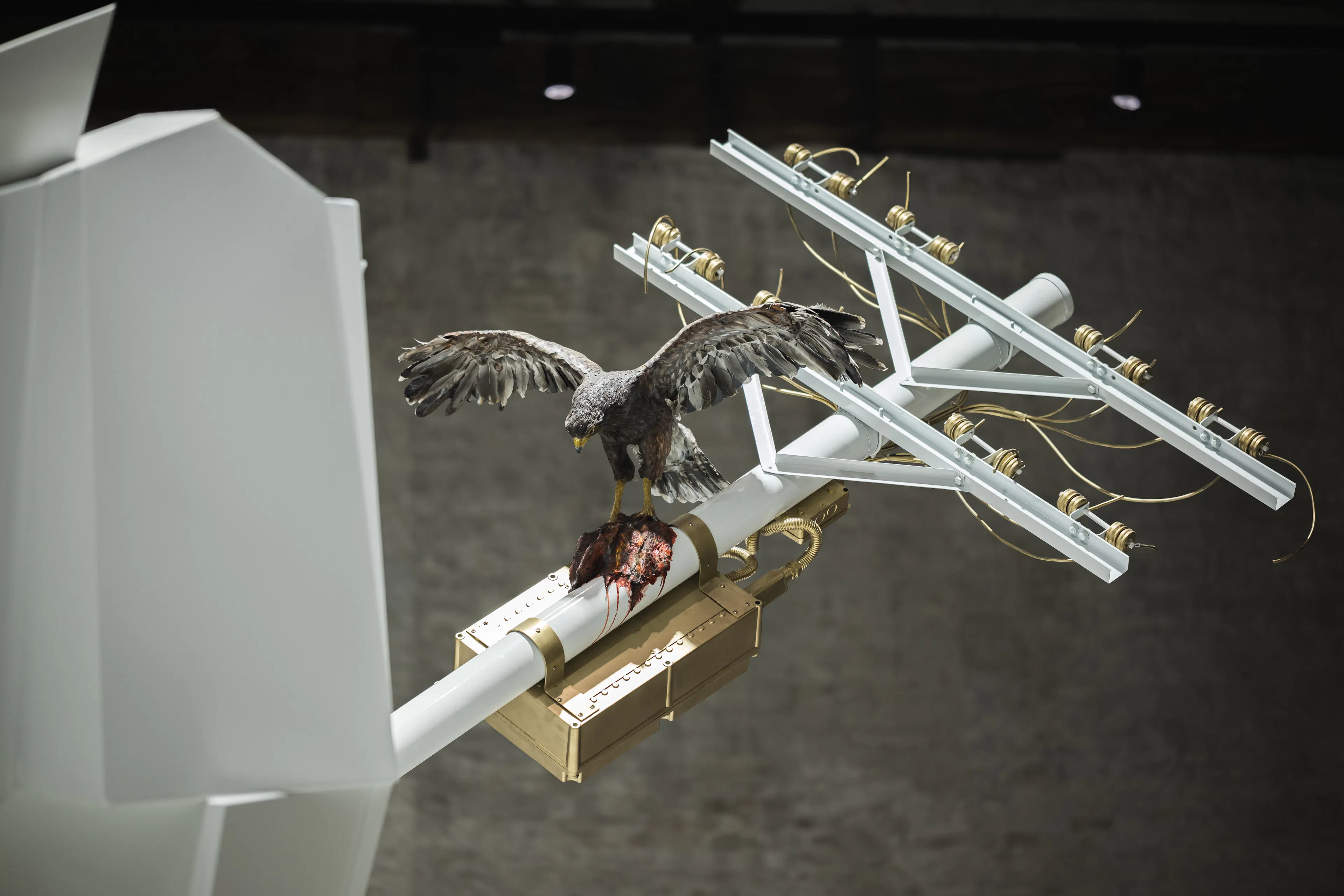
Photo credits © Alvise Busetto
FCR:
In Inter-Reality, sound does not serve as accompaniment but constructs a perceptual geography of its own: nature, war, ancestral songs, mechanical noise, memory, and forms of speech overlap as layers of the same experience. Listening itself also seems to change according to the position of the body in space. How did you construct this sonic dimension, and how does sound intervene in altering the visitor’s perception, orientation, and relationship with the work?
NM:
Sound constructs a landscape within the landscape.
There are elements of nature, but also a dimension of war: songs, birds, flowing water, vibrations, as well as noises that can evoke helicopters, machines, something coming from war or from memory.
I was interested in layering different states, allowing sound to alter the way the interior of the work is perceived. Not as a decorative element, but as an emotional layer in its own right.
For Inter-Reality, the young Chilean composer Iván-Manuel Tapia created an original score. It is a short piece, around a minute and a half long, but deeply immersive, accompanying the experience of entering the work with a strong emotional intensity.
Listening changes depending on the position of the body: from below it is perceived one way, from above another.
On the staircase, the idea of speech also emerges — oratory, a position of power. It might be political speech, military speech, corporate speech: a voice speaking from above.
All of this belongs to the work’s different micro-readings.
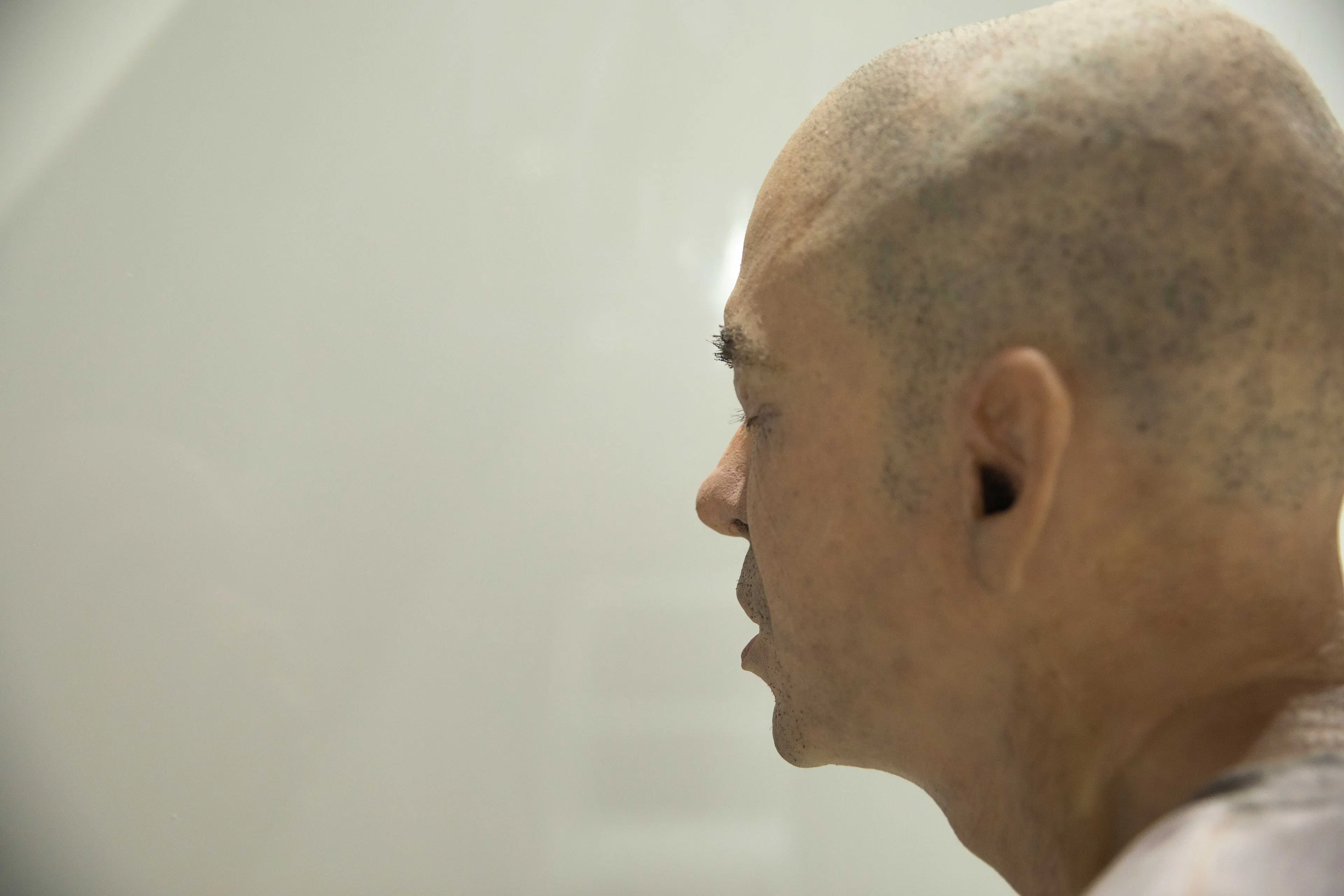
Photo credits © Alvise Busetto
FCR:
The Biennale’s title, In Minor Keys, invites attention to less dominant frequencies, lower registers, and forms of perception that require listening, proximity, and duration. Inter-Reality begins from a monumental presence, yet progressively seems to shift the experience towards openings, shadows, hidden interiors, and slower temporalities. How did you work with this tension between intensity and contemplation, and where do you recognize within the work that “minor key” capable of transforming the way the viewer looks, listens, remains, and is transformed within the space?
NM:
I recognize it precisely in that passage: from the strong, almost monumental presence of the work to what happens once you enter. That is where silence, contemplation, meditation, and slowing down begin to emerge.
Inside, another tone takes shape. People slow down, they stop, they enter a space that becomes almost sacred. A kind of synchrony emerges between bodies, the work, sound, and waiting.
I am very interested in this possibility of contemplation. Today, it is difficult to stop: everything pushes us to move, look, consume quickly. But this work needs another kind of time.
You cannot simply walk, look, and leave. You have to stop, come closer, go back, discover. That is where a more intimate, lower, more emotional tone emerges.
In this sense, the external intensity of the work leads towards a more contemplative state of attention: a slower way of listening, looking, and remaining in the space.
FCR:
A work of the scale and complexity of Inter-Reality inevitably emerges within an extended network of expertise, constraints, and mediations: curatorship, architecture, production, fabrication, sound, transport, and installation all become part of the process of realization. How did you navigate this collective and infrastructural dimension of the work while keeping recognizable the emotional, artistic, and political core from which it originated?
NM:
It was a very complex process.
When I decided to apply to the Biennale, we were already almost out of time. I proposed the project to the curators Marisa Caichiolo and Dermis León, and both committed to it with tremendous energy despite the very limited time available. For me, it was important to try, because the Biennale is a place where you can articulate a discourse, open up a reflection, generate a reaction.
The difficulty was understanding how to work on a piece of this scale from a distance, without physically knowing the space. So, I began to analyze its spatial qualities, its constraints, and its possibilities.
In my creative process, one project very often leads to another. I return to ideas that had been left unresolved, discarded, or set aside.
The astronaut Pope, for example, came from an earlier project. It was a model I had presented before, connected to the conquest of the Americas but imagined as the conquest of another planet. That idea returned and found its place here.
Books, family memories, images from childhood, memories of exile also resurfaced. My grandfather had an art history book that I incorporated into the work. These are stories and objects that return, each time finding a new form within the work.
Then came the technical dimension: fabrication, transport, deciding what could be shipped by sea, what risks could be taken, what absolutely had to arrive on time. There were very difficult moments. One part was held up; another arrived with only a few days to spare.
But you keep going because you believe in that dream. And, at a certain point, it is no longer only personal: there is a team, there are the curators, there are people working with me, trying to understand its form, its space, its experience.
We had to protect that first emotional image, even when everything surrounding it had become production, logistics, pressure, and risk.
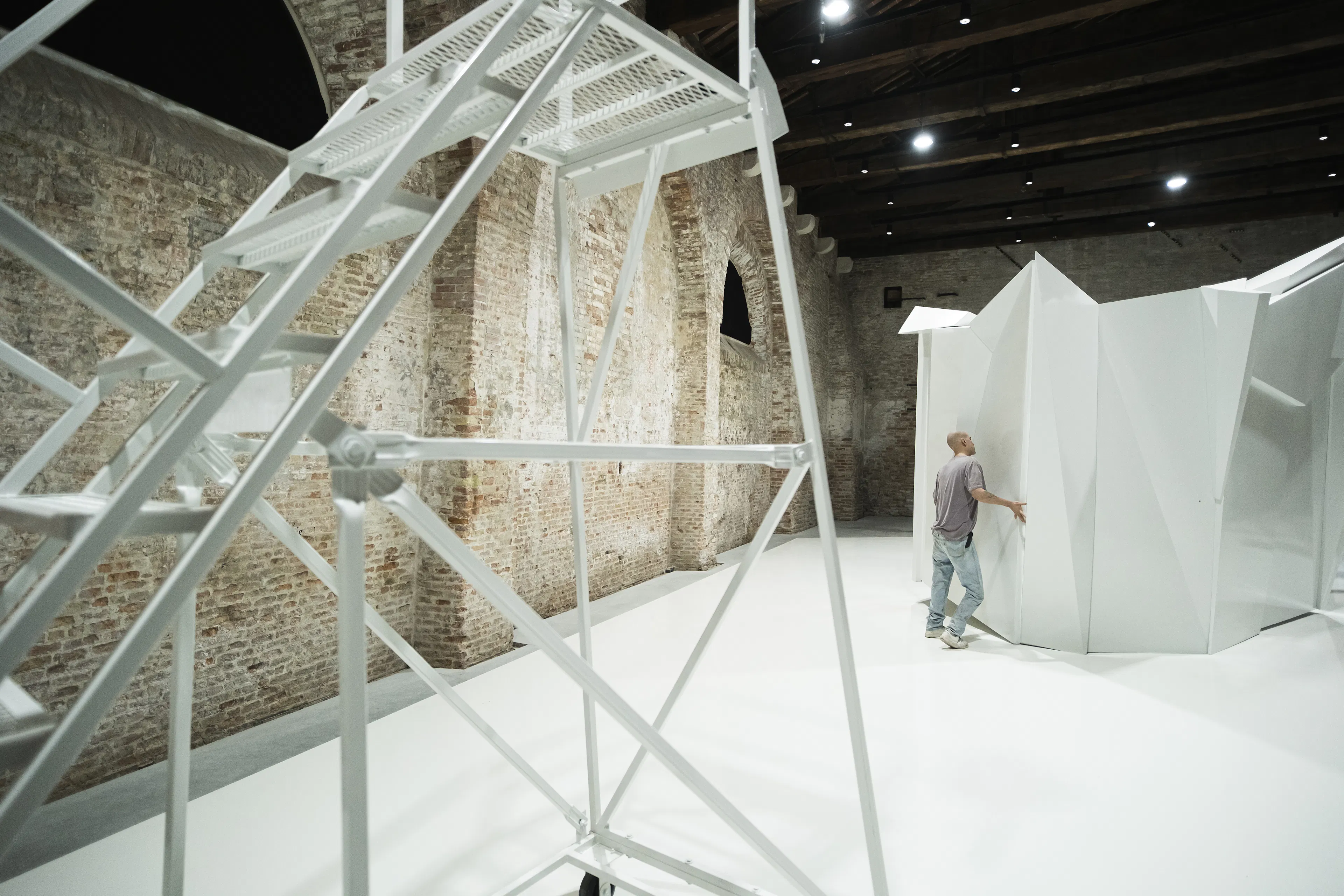
Photo credits © Alvise Busetto
FCR:
Inter-Reality does not seem to move towards a conclusion or condense itself into a single message. Instead, it constructs a hybrid and unstable perceptual condition, in which details, scales, sounds, and successive worlds gradually alter the way the visitor reads what is before them. If the work continues to act beyond the duration of the encounter itself, what would you want to remain — or to continue operating — in the body and memory of those who have moved through it?
NM:
I would like something hybrid to remain.
Not necessarily a clear message. More a state: the feeling of not knowing exactly what happened, but sensing that something has changed.
Many people arrive at Inter-Reality after moving through other pavilions. They enter this white, cold, almost laboratory-like space and gradually begin to discover another reality: objects, colors, sounds, details, hidden scenes, shadows, scales.
A kind of disconnection then occurs from the reality they brought in with them. Not a negative confusion, but a different perceptual state: something emotional, uncertain, difficult to name.
That is what interests me: that the visitor leaves with the feeling of having entered one reality while another has begun to take shape within them.
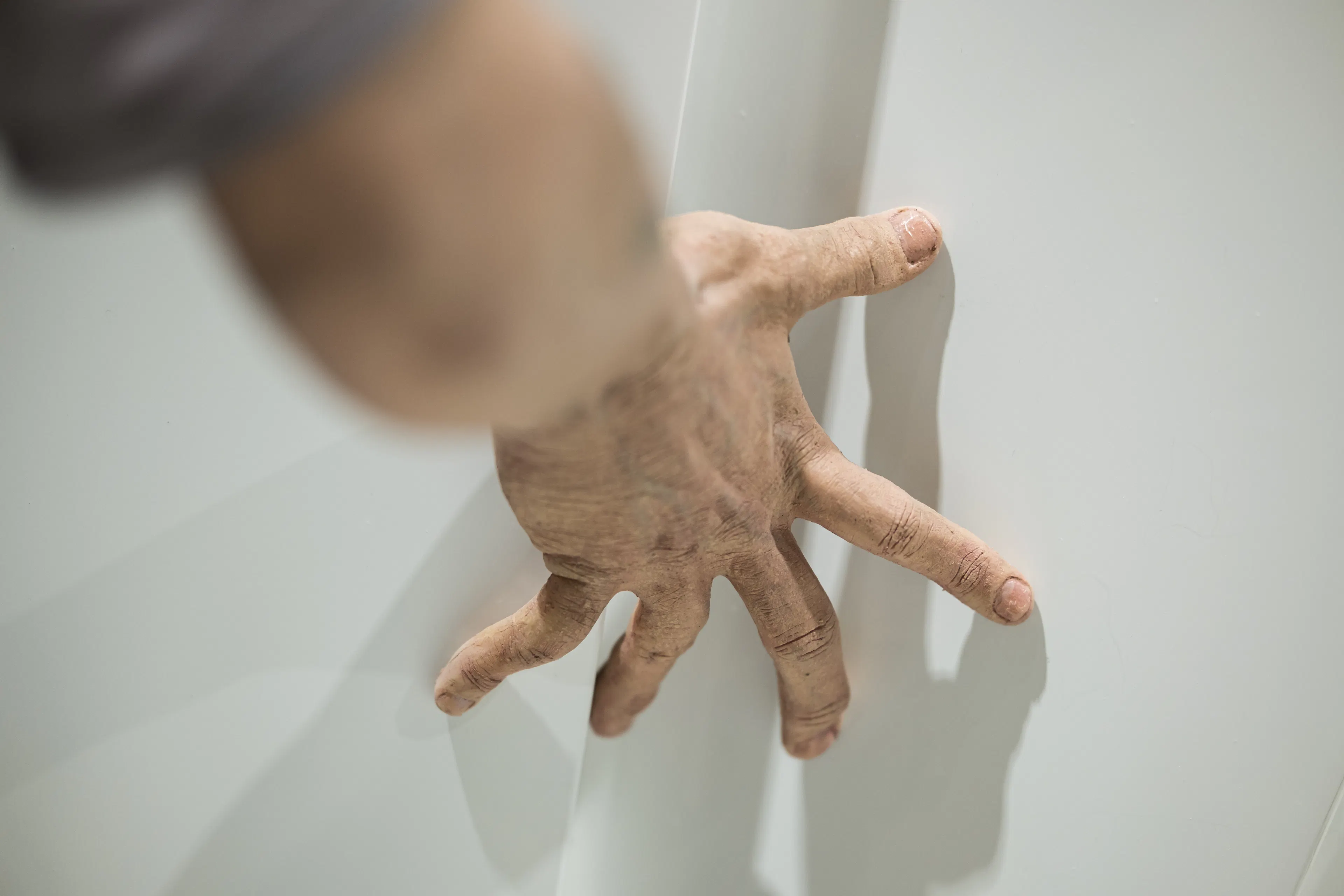
Photo credits © Alvise Busetto
echoes is a curatorial project conceived within We Exhibit and curated by Francesca Carol Rolla. It brings into relation art, culture, and memory through encounters and practices of listening, where voices from contemporary art, critical thought, and research intersect.
Learn more about the project on the dedicated page of our EDITORIALS edition.