Statues Also Breathe
Collective Body and an Infrastructure of Memory
by Francesca Carol Rolla - Head of PR & Cultural Advocacy, We Exhibit
On April 14, 2014, in the warm night of Chibok, 276 high-school girls are abducted by Boko Haram.
It is not only a kidnapping. It is war against education. Domination over the female body.
Control over knowledge. Over freedom. Over the future.
With time, the media echo fades. Images thin out. Words erode.
What remains is absence — an open wound in the fabric of the community, a void that insists.
Statues Also Breathe rises from that subtraction and renders it visible.
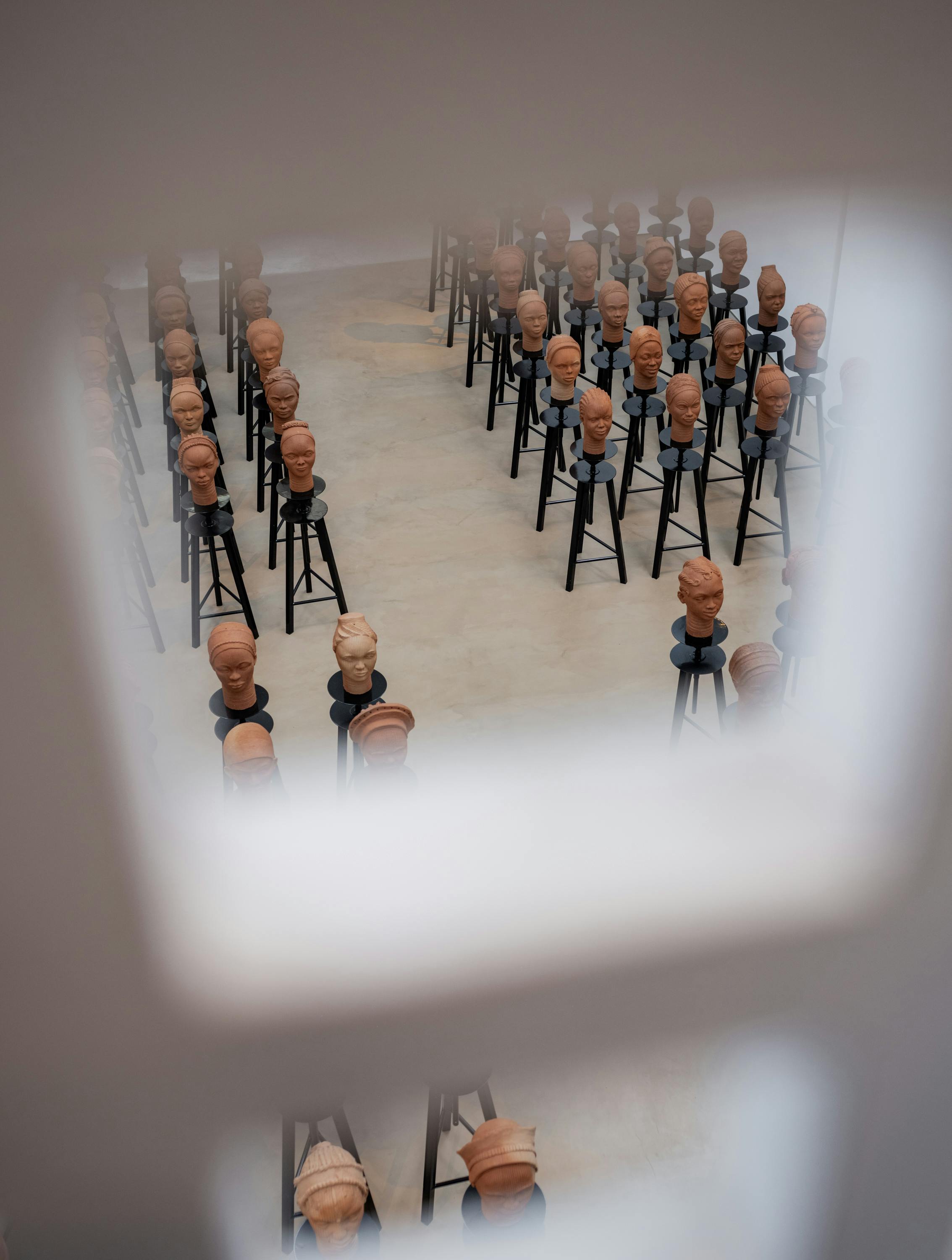
One hundred and eight terracotta heads. One hundred and eight presences.
Each face is singular, an incarnation of a girl still missing.
Each expression holds a difference, a lineage, a gaze that shelters a story.
Here, restitution takes form.
If the traditional archive seals and conserves, here the archive opens, expands, and circulates.
It activates, enters relation, crosses generations, and offers itself to dialogue.
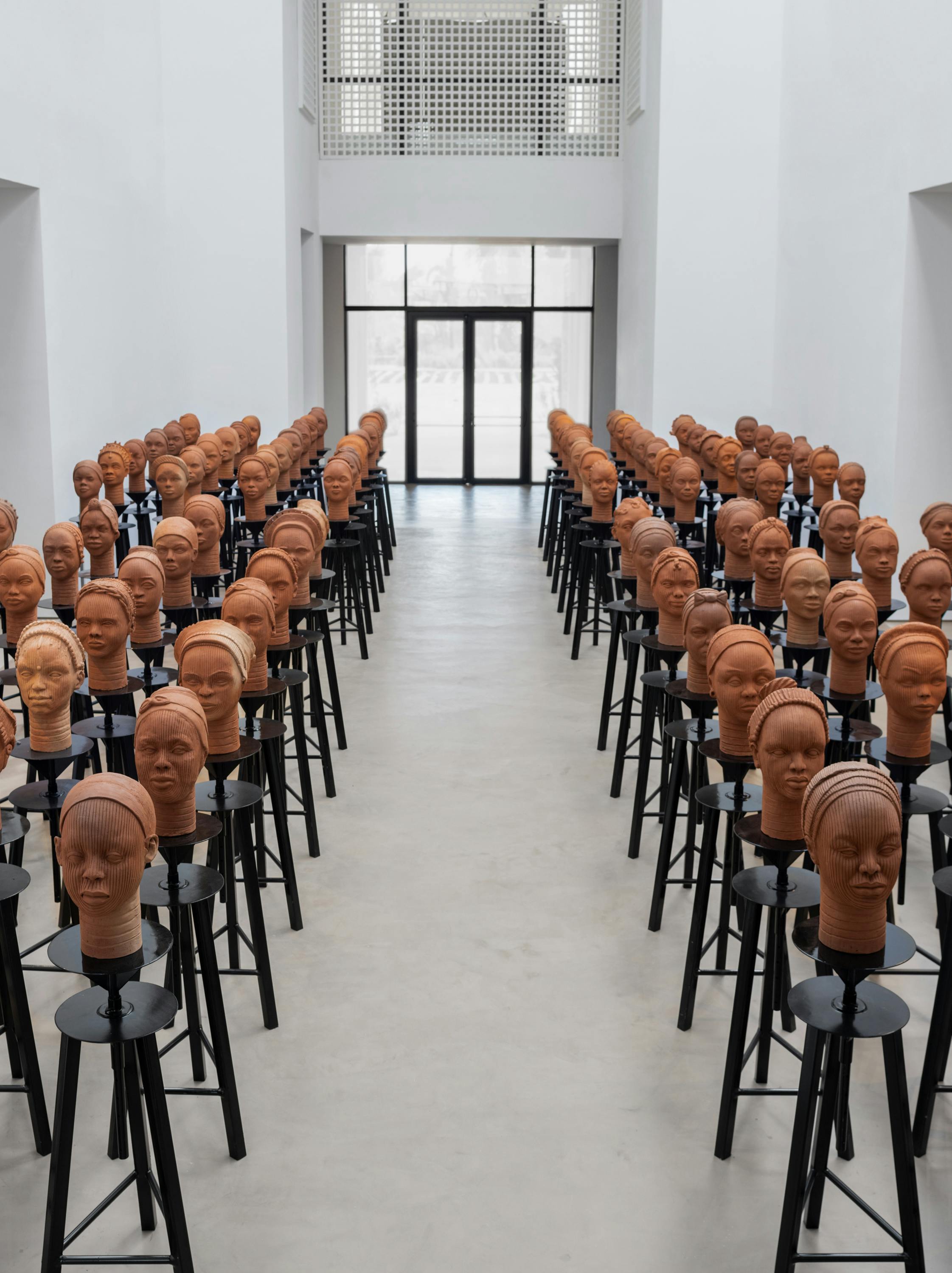
Photo Credits: James Stapleton
The terracotta comes from Ile-Ife, the spiritual and artistic cradle of Yoruba culture.
Ile-Ife is not just any place: it is cosmological origin, a mythic city where the human takes form.
To return to the celebrated Ife heads — naturalistic, solemn, etched with vertical lines that resemble ritual traces — is to withdraw the narrative from the colonial lens that denied Africa a sophisticated figurative tradition. It is to affirm a continuity that precedes violence.
To return to Ife is to reinscribe these girls within a millennial genealogy.
They stand as heirs to a complex civilization.
Before and beyond the tragedy, there is a history that holds them.
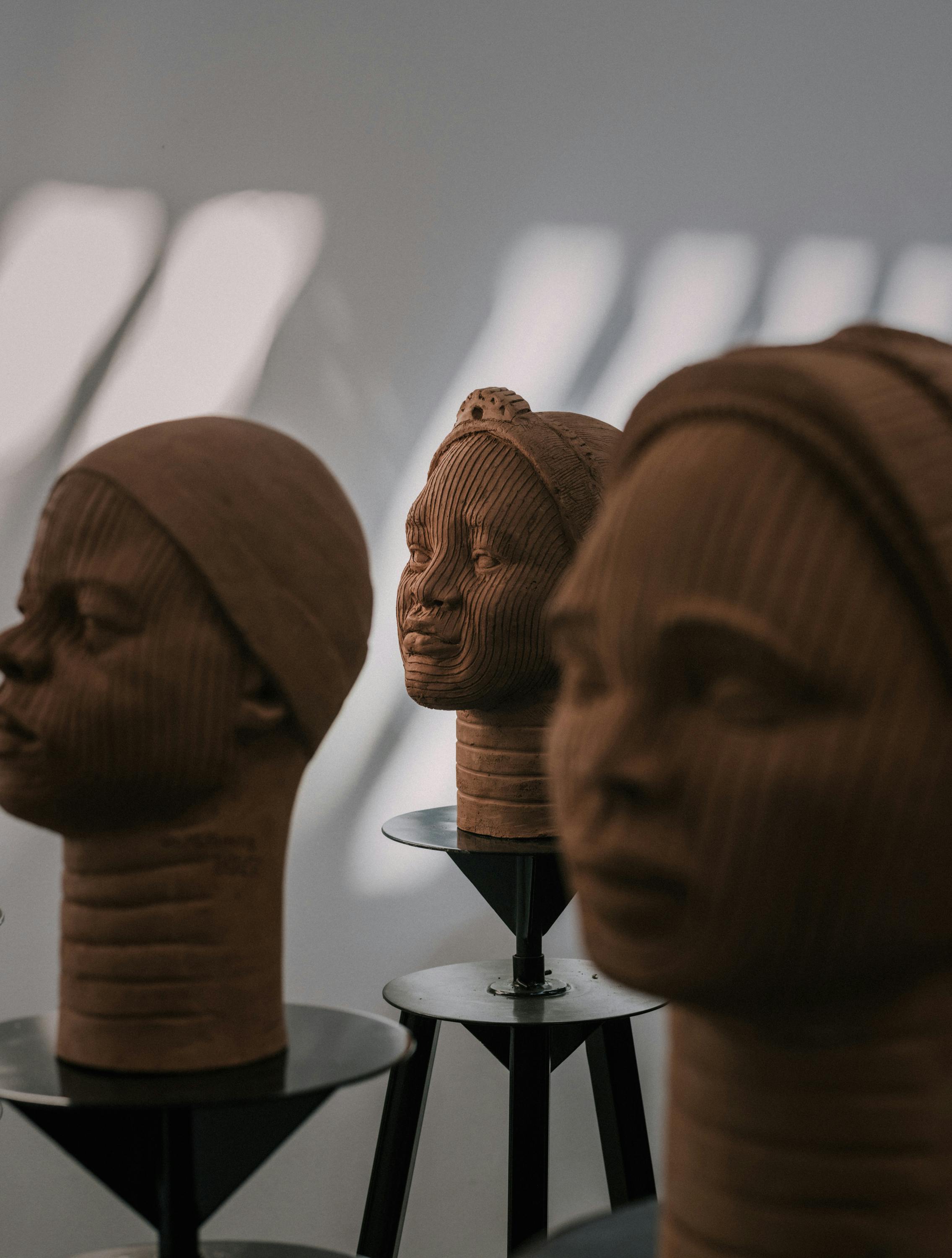
Photo Credits: James Stapleton
Memory here is generative.
It is generated and regenerated in the clay of Ile-Ife, in the hands of students at Obafemi Awolowo University, in the gaze of mothers and fathers, in the work of local craftswomen, in the presence — at MACAAL — of two survivors.
The wound is not made into spectacle.
It rises vertically.
The first eight heads are born from photographs entrusted by the families.
From those faces the molds are cast.
One hundred and eight students and craftswomen from different regions of Nigeria shape each sculpture.
They sign it.
The 108 heads take form from 108 photographs.
Authorship shifts, dilates, distributes itself across many hands.
Production becomes pedagogy.
The form of art assumes a collective responsibility.
And the artistic gesture opens.
Shared ground.
Passage.
Community, formed in clay.
Photo Credits: James Stapleton
The 108 sculptures breathe together.
They are an army.
An indivisible body.
The choice is radical: no mercantile fragmentation.
Memory cannot be privatized when trauma is collective.
To separate them would be to disperse their meaning, and to violate them once again.
Their force lies in indivisibility.
A silent community constituted in the exhibition space through an absence that becomes body.
Compact.
Threshold.
They do not retreat.
They compose a cosmological figure that alters our distance from history.
And so the number 108 does not appear accidental. It is necessary.
It coincides with the girls still missing when the project takes form.
108: cycle. Origin. Void. Infinity.
It is a vibration that links the body to the cosmos, and matter to transcendence.
It is the passage from dispersion to unity, like the beads of the mala that mark the rhythm of meditation.
That the final sculptures are 108 was never merely a formal choice.
It is alignment. A cosmology made material.
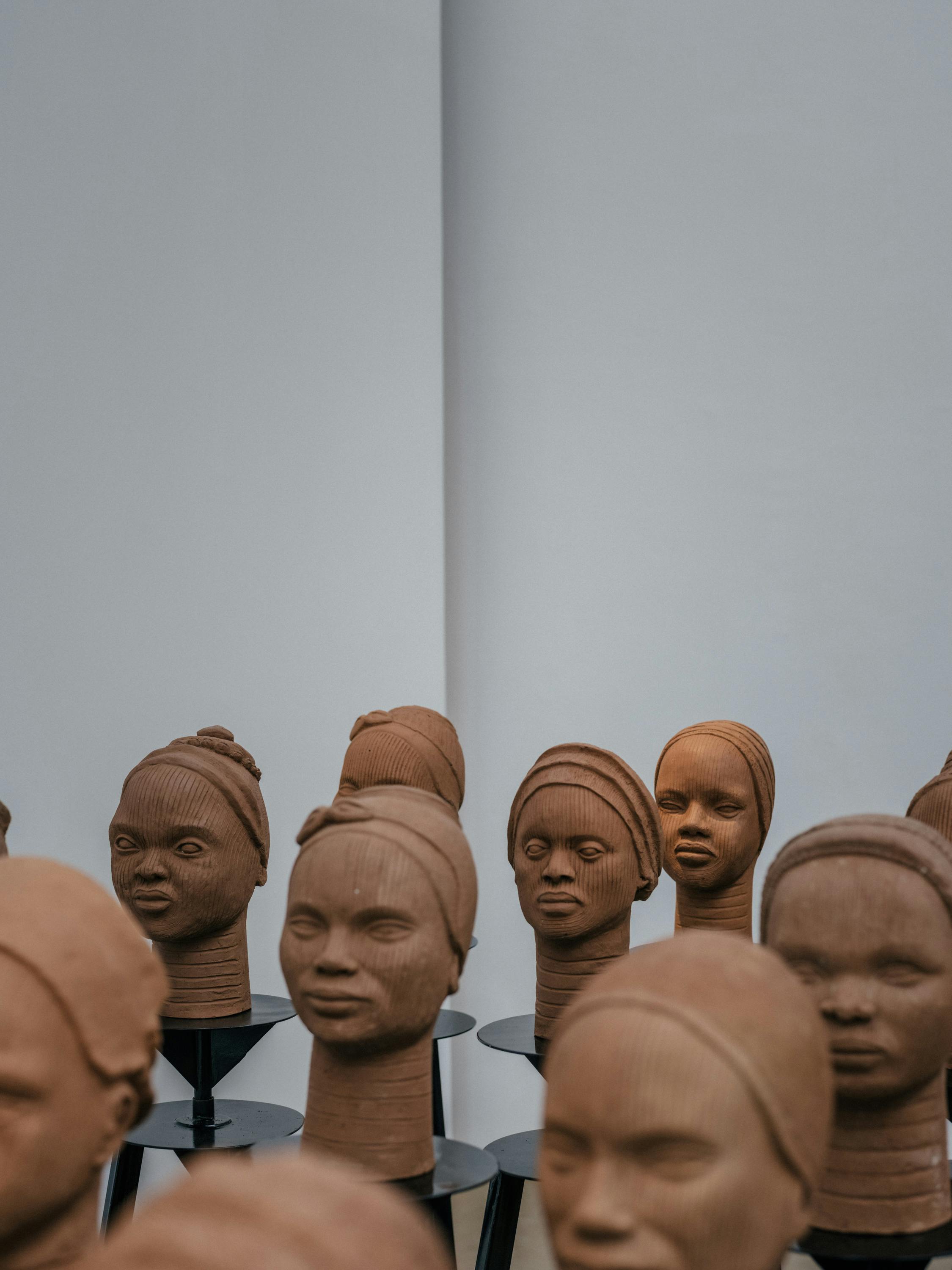
Photo Credits: James Stapleton
Statues Also Breathe exceeds the dimension of an installation.
It takes shape as a cultural production device.
It binds university, local craft, families, institutions, media.
It puts pressure on the author/object hierarchy.
It shifts the work from artifact to an infrastructure of memory.
It inhabits the realm of art while building an ethical ground.
Where pain is not consumed but recognized.
Where dignity becomes form.
Here tragedy is not aestheticized.
Violence remains named.
Abduction remains a political act.
The statues stand.
The clay holds imprints.
Within collective trauma, through sculpture, form rises again.
Among the faces, memory insists — alert, present, irreducible.
It holds.
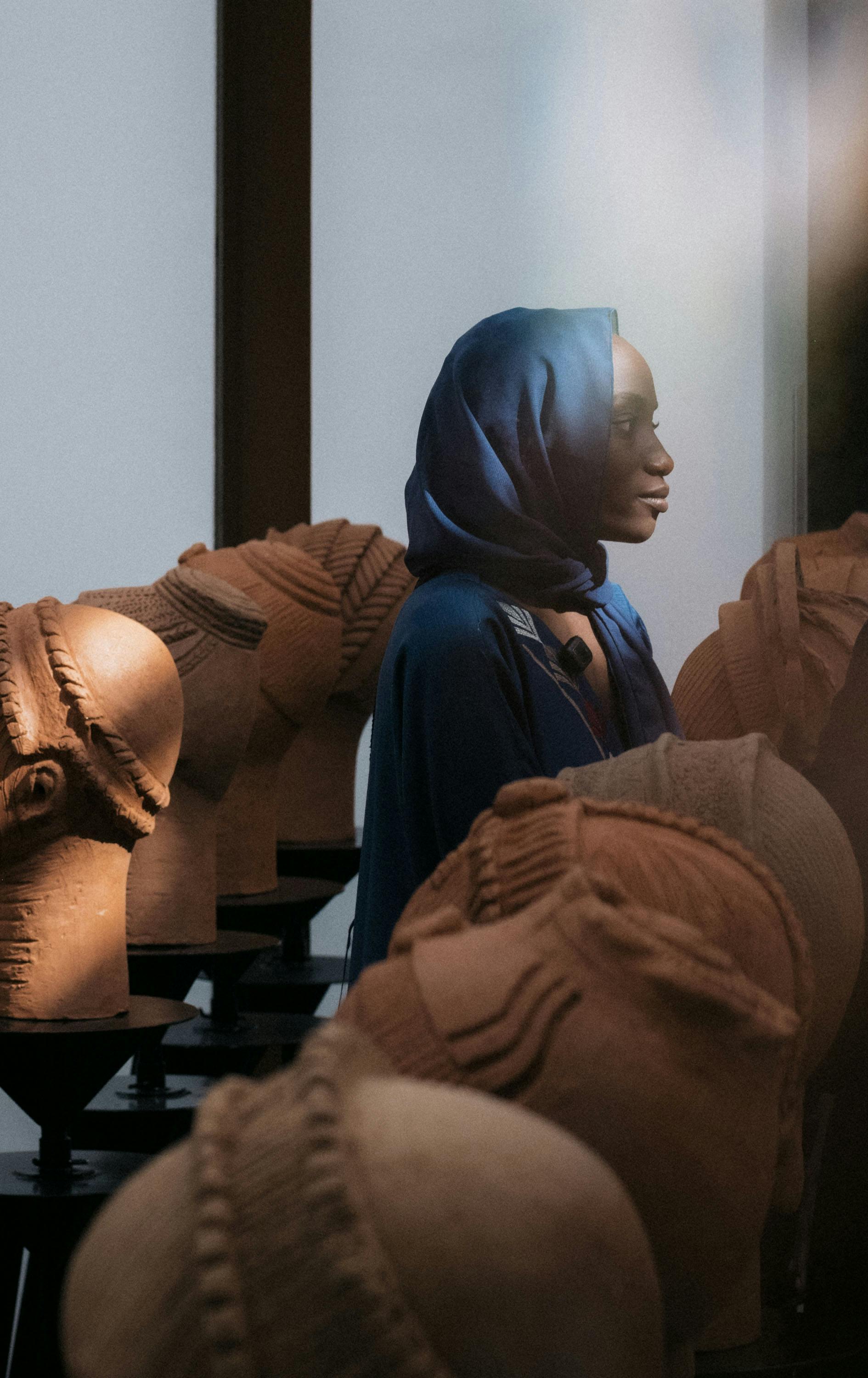
Photo Credits: James Stapleton
Statues Also Breathe stems from the collaboration between the artist Prune Nourry, Obafemi-Awolowo University in Ile-Ife, and the families of the 276 high-school girls abducted by Boko Haram in Chibok, Nigeria, on April 14, 2014; 108 remained in captivity when the project was conceived. From portraits entrusted by the families, 108 heads were shaped using clay from Ile-Ife by craftswomen from Ilorin and university students. The exhibition is accompanied by a documentary film by Vincent Lorca and Chioma Onyenwe. Supported by the Catharsis Arts Foundation, the work continues to travel toward a permanent home in an African museum, as a testament to Nigeria’s cultural vitality and the ongoing struggle for girls’ education worldwide.