10 pavilions to experience and understand
– Biennale Architettura Venezia 2025
by Giulia Barigelli - Communication Manager, We Exhibit
Kosovo Pavilion – “Sensing” the Future
The visit inside the Kosovo Pavilion begins with the body. Here, you don’t just look: you walk, breathe, and smell. The sense of smell becomes your guide, leading you through a suspended installation made up of a system of pipes that diffuse scents evoking seasons, soil, and presence.
In an age where nature’s cycles are increasingly unpredictable and data is no longer enough, this project proposes an alternative archive: a sensory database made of fragrances, tactile sensations, and silences. Visitors are invited to slow down, tune in to their surroundings, and read the landscape through the senses.
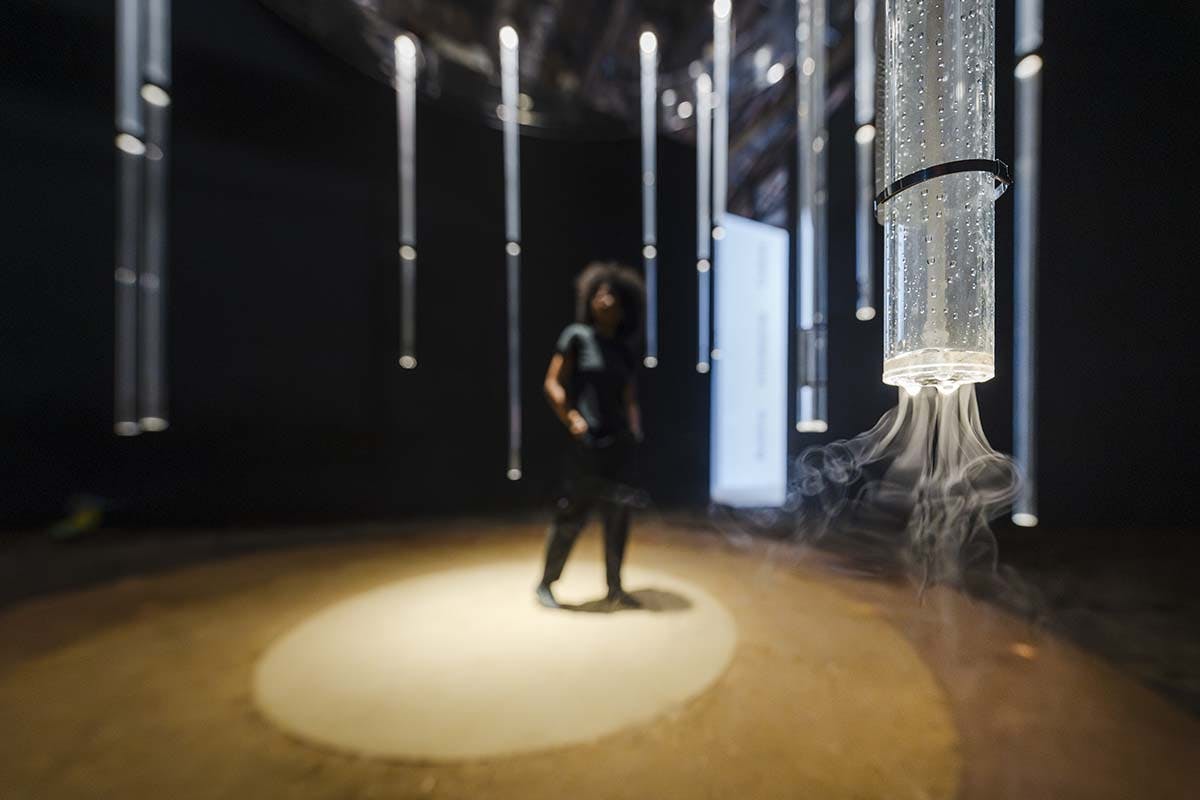
Kosovo Pavilion, Biennale Architettura 2025
Morocco Pavilion – Touching Time
Another project that stimulates the senses is the Morocco Pavilion.
Here, tradition and innovation meet in a virtuous dialogue: the project explores how ancient building techniques can intertwine with contemporary digital technologies, redefining the concept of collective intelligence within the architectural process.
The Pavilion offers an individual experience. Visitors are invited, by the layout of the installation, to create their own route, winding their way among the many columns that delineate rather narrow paths—a maze of surfaces to brush against, textures to explore, and digital projections that bring ancestral gestures, tools, and rituals to life.
The narrative becomes even more engaging thanks to holograms that give voice and body to two Moroccan artisans—silent protagonists of a rich shared technical and cultural heritage.
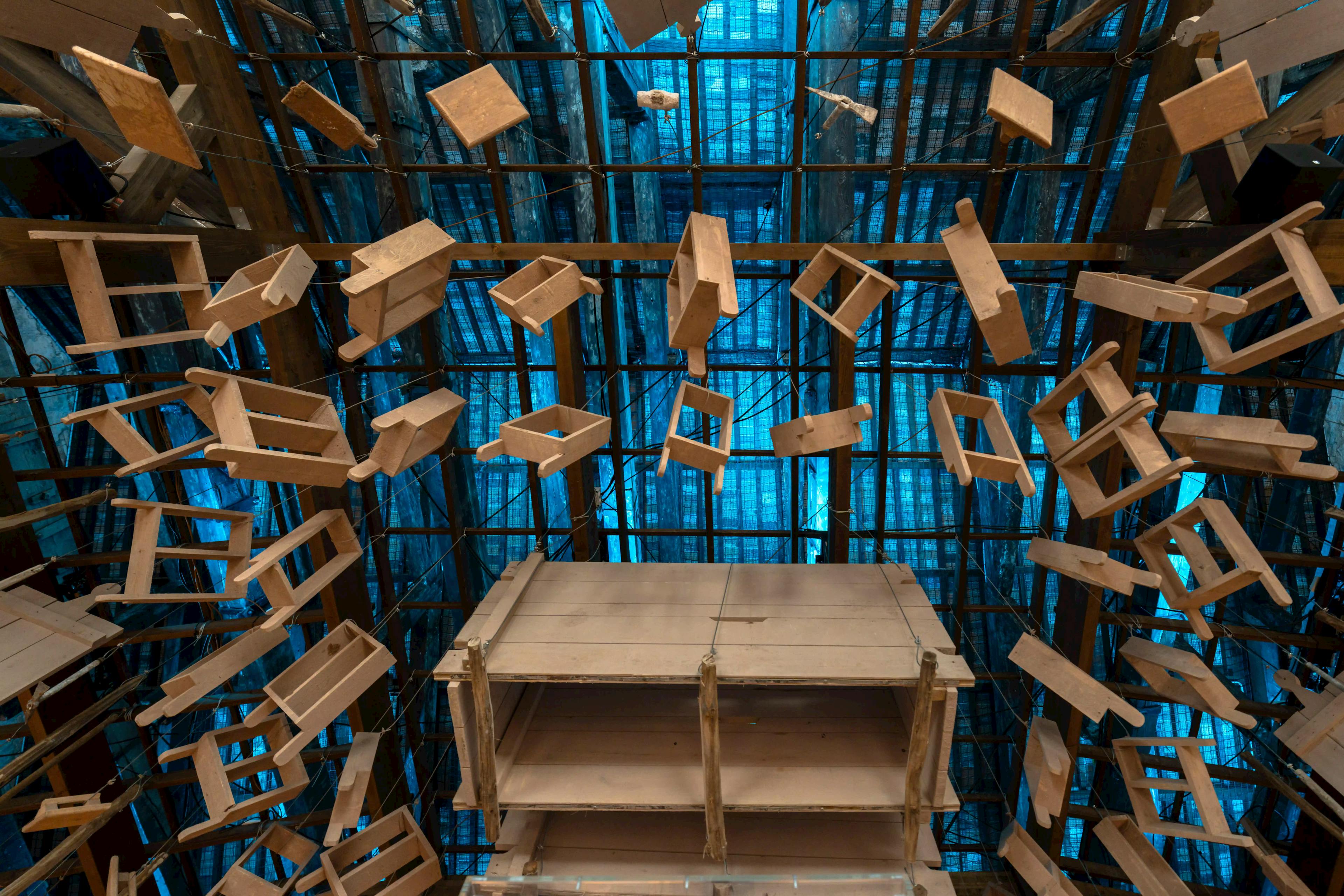
Morocco Pavilion, Biennale Architettura 2025
Mexico Pavilion – Scents, Fragrances and Connections
In the Mexico Pavilion too, it is the body that guides the visit.
Visitors are welcomed into a landscape to be crossed slowly: one walks along the edges of small cultivated islands—the chinampas—immersed in a lively but enclosed environment.
The project tells of nature's cycles, biodiversity and resilience, but above all offers the opportunity to slow down, leaving space for a deeper and more attentive perception. It feels like being in an intimate garden, where time stretches and senses awaken: the air feels dense, greenery envelops you, as humidity and the scent of vegetation stimulate your sense of smell.
Around the installation, resting areas and shaded zones offer space for decompression, where the body can stop, breathe, and recharge, transforming the visit into a genuine moment of connection with the environment.
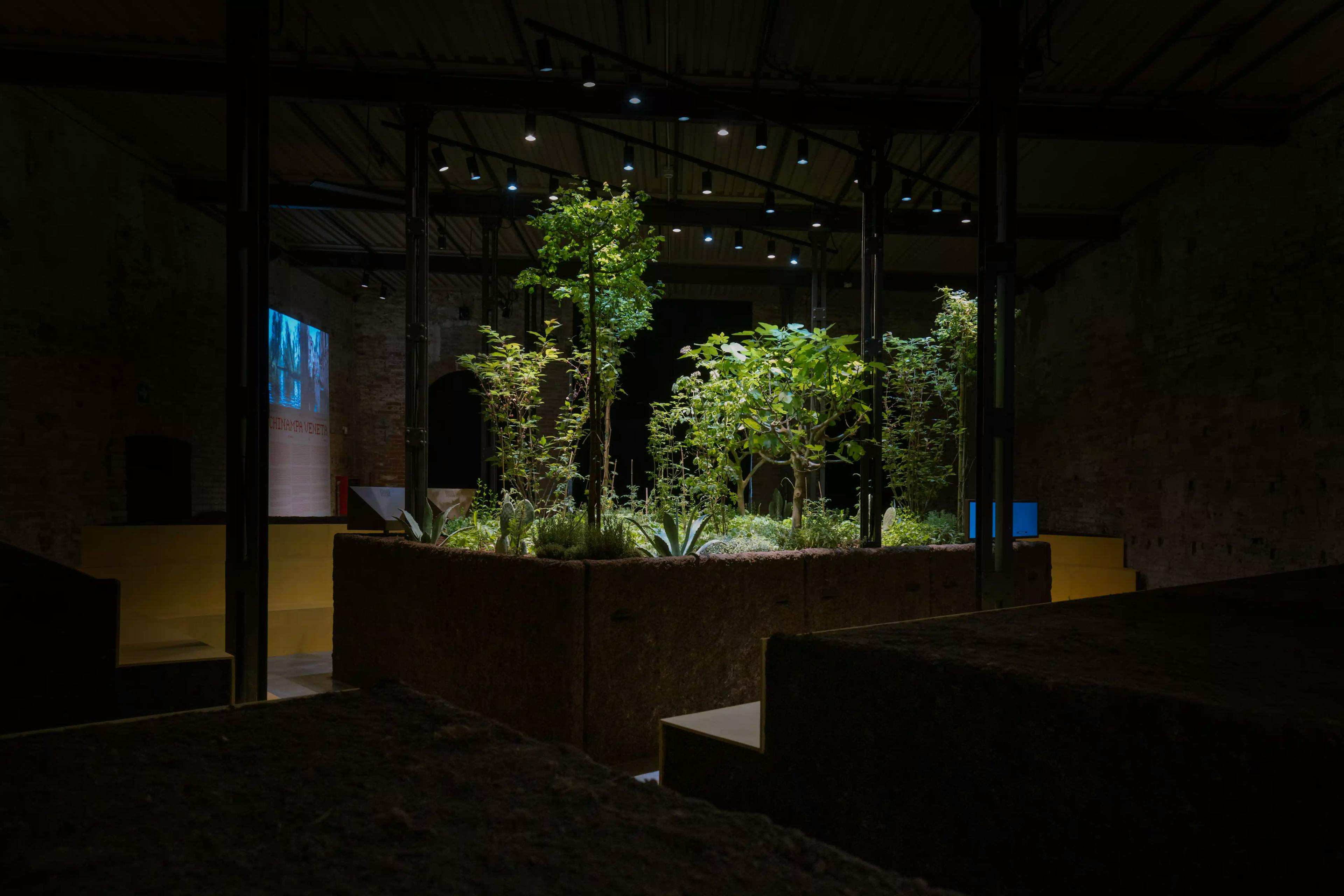
Mexico Pavilion, Biennale Architettura 2025
Oman Pavilion – Welcoming Spaces
The Oman Pavilion offers a visiting experience that is open and without boundaries: there are no doors, no fixed routes. The space opens in every direction, giving visitors complete freedom to come in, pause, or move as they wish.
At the centre stands an installation accessible from all sides, surrounded by benches that encourage visitors to pause and share a moment. Made from perforated aluminium echoing traditional Omani motifs, the project unites cultural roots and modernity, transforming the space into a civic arena where stopping isn’t just a break but becomes an essential part of the experience.
The inspiration comes from “sablat”, traditional Omani home areas dedicated to hospitality and family and community gatherings, offering an experience that values sociality and connection between people.

Oman Pavilion, Biennale Architettura 2025
China Pavilion – Coexisting with the Senses
The China Pavilion welcomes visitors with an expansive set-up designed to offer full freedom of exploration.
The open layout invites you to create your own path through a sequence of installations alternating visual and sound stimuli.
The entrance surprises with a sparkling, evocative structure that introduces the theme of cultural coexistence forming the Pavilion’s basis.
Walking through immersive environments and enveloping sounds, the visit becomes a sensory experience thanks to interaction with installations that speak different languages.
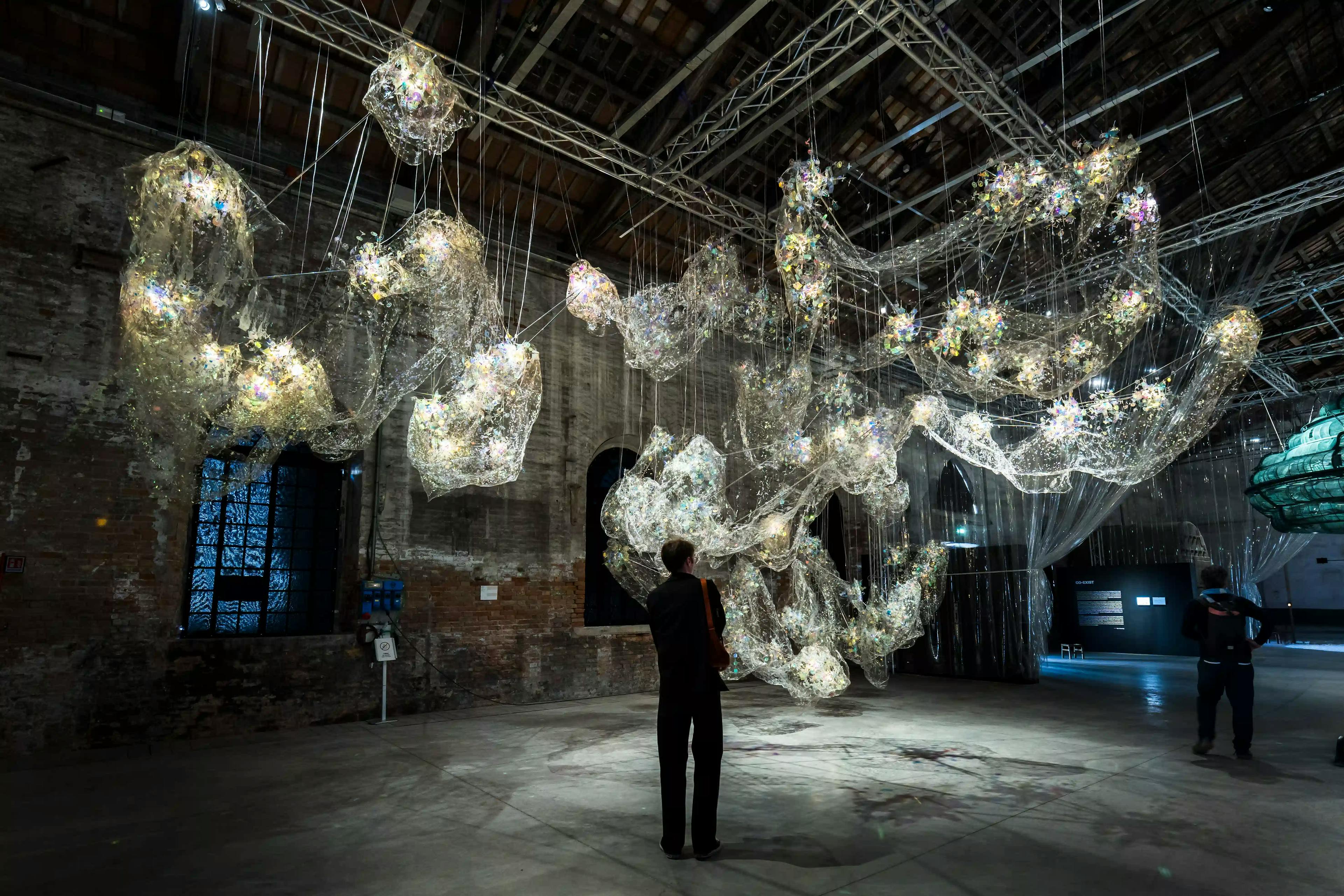
China Pavilion, Biennale Architettura 2025
Uzbekistan Pavilion – Traces of Memory
In the Uzbekistan Pavilion, too, the experience is open and unstructured: inside the exhibition space, visitors are free to choose where to start and how to move. Most works are visible from every angle, leaving room for personal curiosity and spontaneous interaction.
The exhibition brings together original fragments of the structure, reinterpreted architectural elements, and custom-made objects which find new meaning thanks to the arrangement and atmosphere of the place. The project pays homage to the Sun Institute of Material Science, one of the world’s largest solar furnaces, built in 1987 for military and scientific purposes.
Reinterpreted through the language of art and architecture, this symbol today becomes a message of sustainability and culture, inviting visitors to reflect on traces of the past and possible futures.
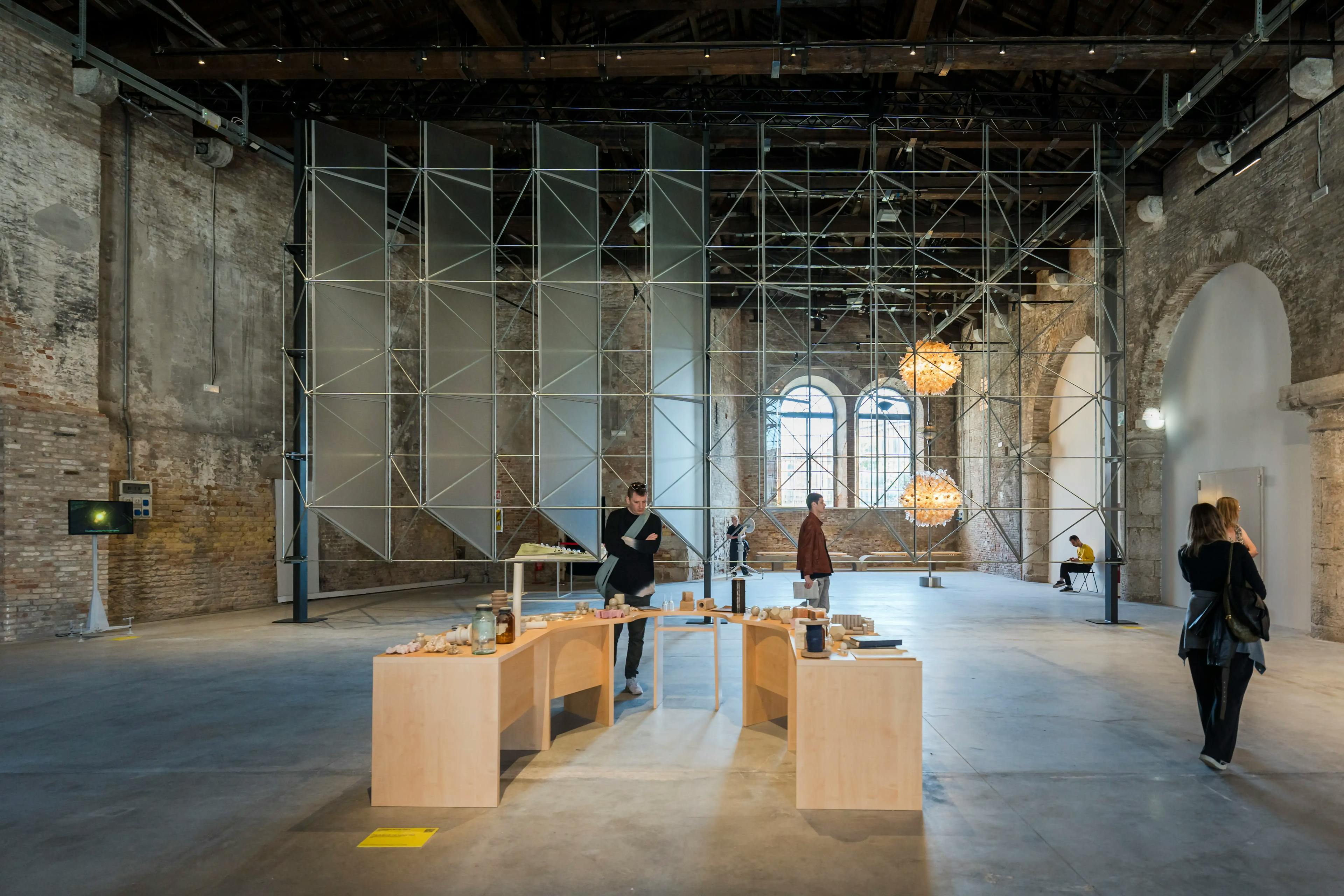
Uzbekistan Pavilion, Biennale Architettura 2025
Turkey Pavilion & Philippines Pavilion – Listening to the Earth
If you're looking for a place to slow down and immerse yourself in a space for deep listening, the Turkey Pavilion welcomes you with an intimate and enveloping atmosphere.
At its heart, a large installation invites you to pause, while listening stations create moments of silence and contemplation, far from the hectic pace of the external route.
For this edition of Biennale Architettura, Turkey is proposing a multi-layered experience exploring earth through sensory, scientific and artistic languages, inviting you to rediscover, reinterpret and imagine this essential element from many perspectives.
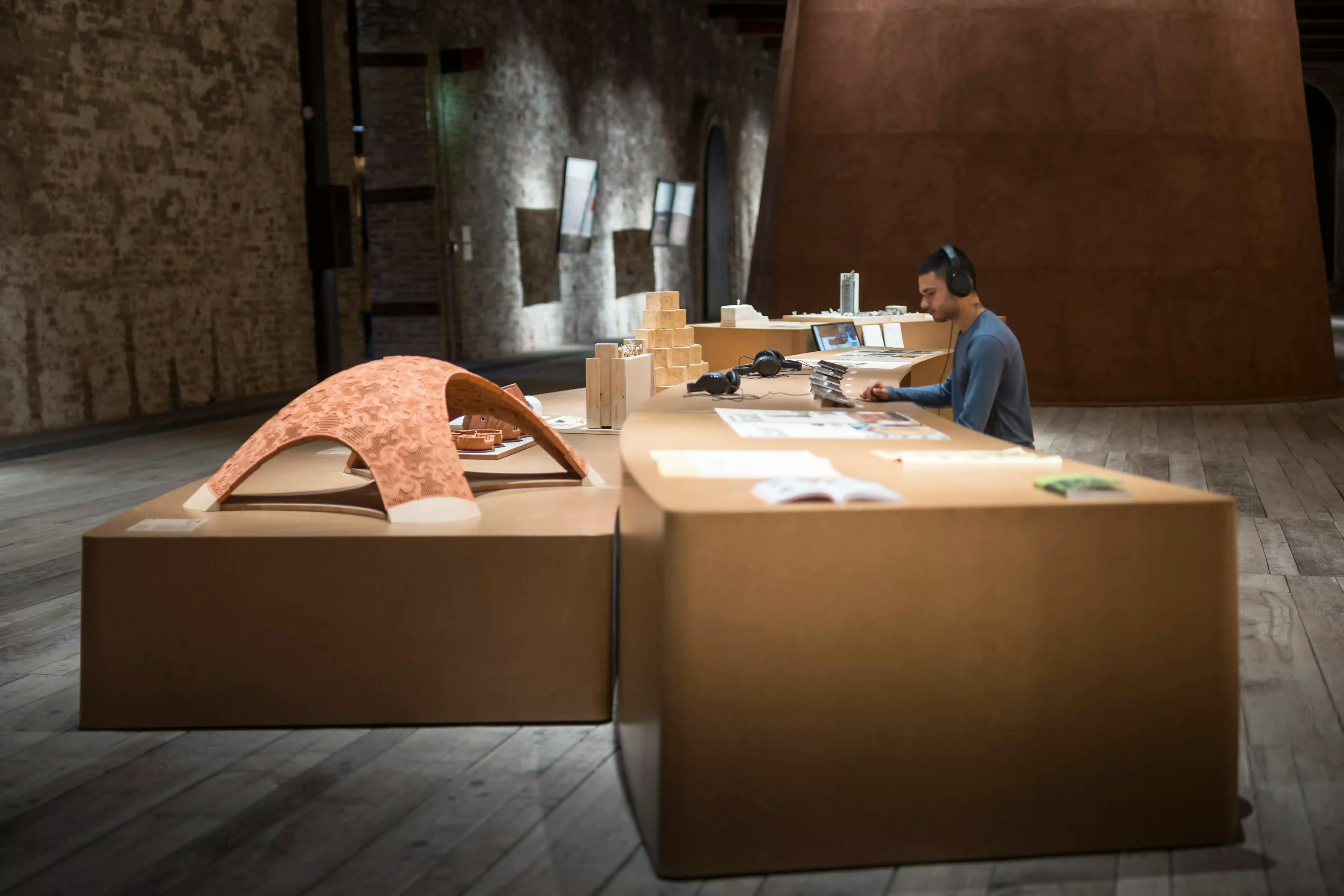
Turkey Pavilion, Biennale Architettura 2025
The Philippines Pavilion also invites careful listening and a deeper understanding by reading the soil. Here, the soil is recognised as a living and powerful element, capable of reshaping aspirations and architectural solutions.
Dedicated listening stations and captions accompany your visit, guiding you on a sensory journey that awakens awareness of the deep bond between land, culture and architecture.
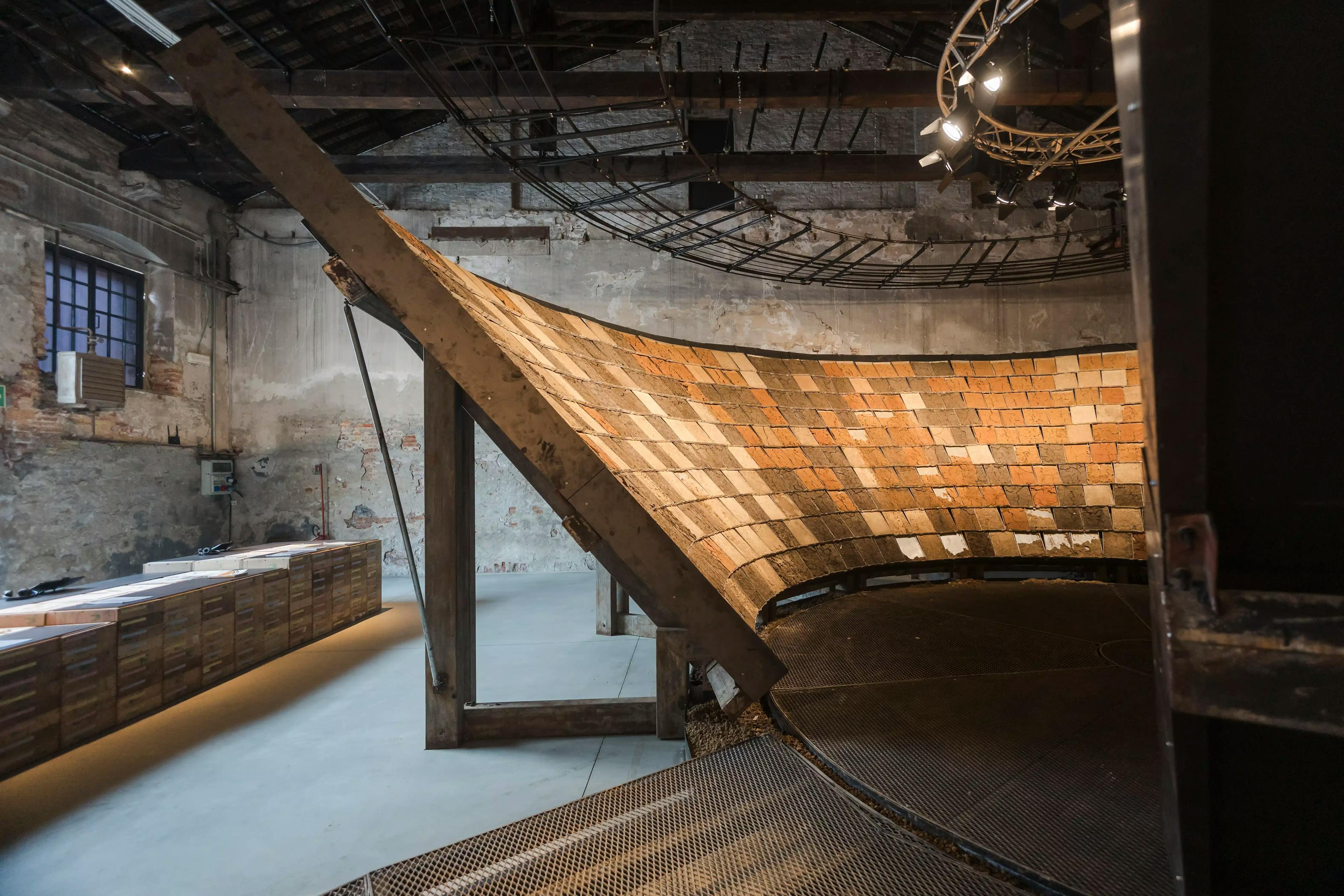
Philippines Pavilion, Biennale Architettura 2025
Chile Pavilion – Silence in the Dark
If you arrive at the Chile Pavilion after having walked outdoors, often under the hot sun and through the pavilion crowds, you are greeted by a completely different atmosphere.
You enter a space wrapped in total darkness, immediately inviting you to recalibrate your gaze and rest your eyes. A gentle green light accompanies the path, guiding you without ever forcing.
The project stages the value of the round table—a symbol of dialogue and political debate, central to participatory environmental processes in Chile.
Through light and the organisation of space, it explores tensions between technology and territory, between State and community, and between artificial intelligence and the material bodies that sustain it, inviting visitors to listen attentively and mindfully.
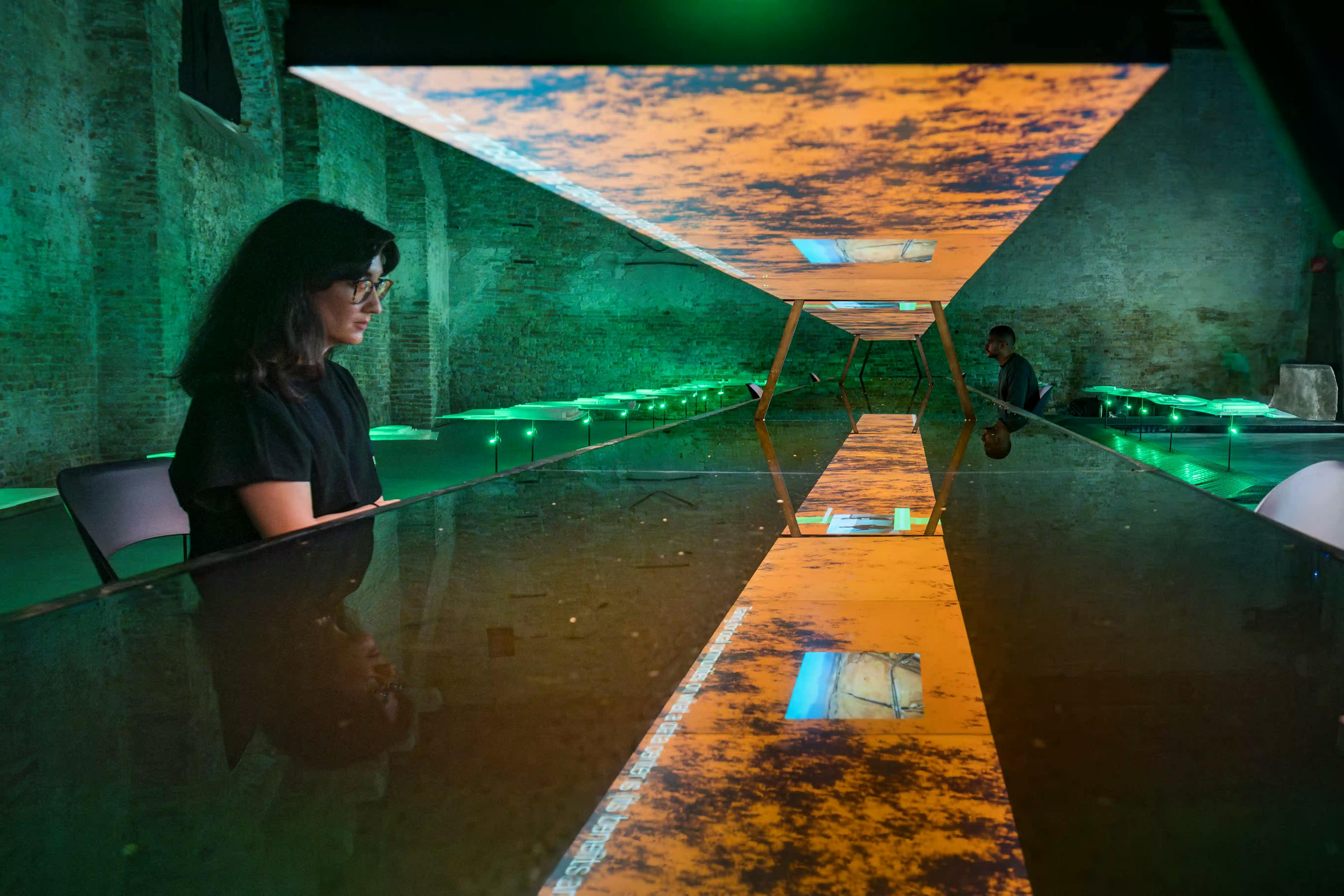
Chile Pavilion, Biennale Architettura 2025
Saudi Arabia Pavilion – Light and Calm
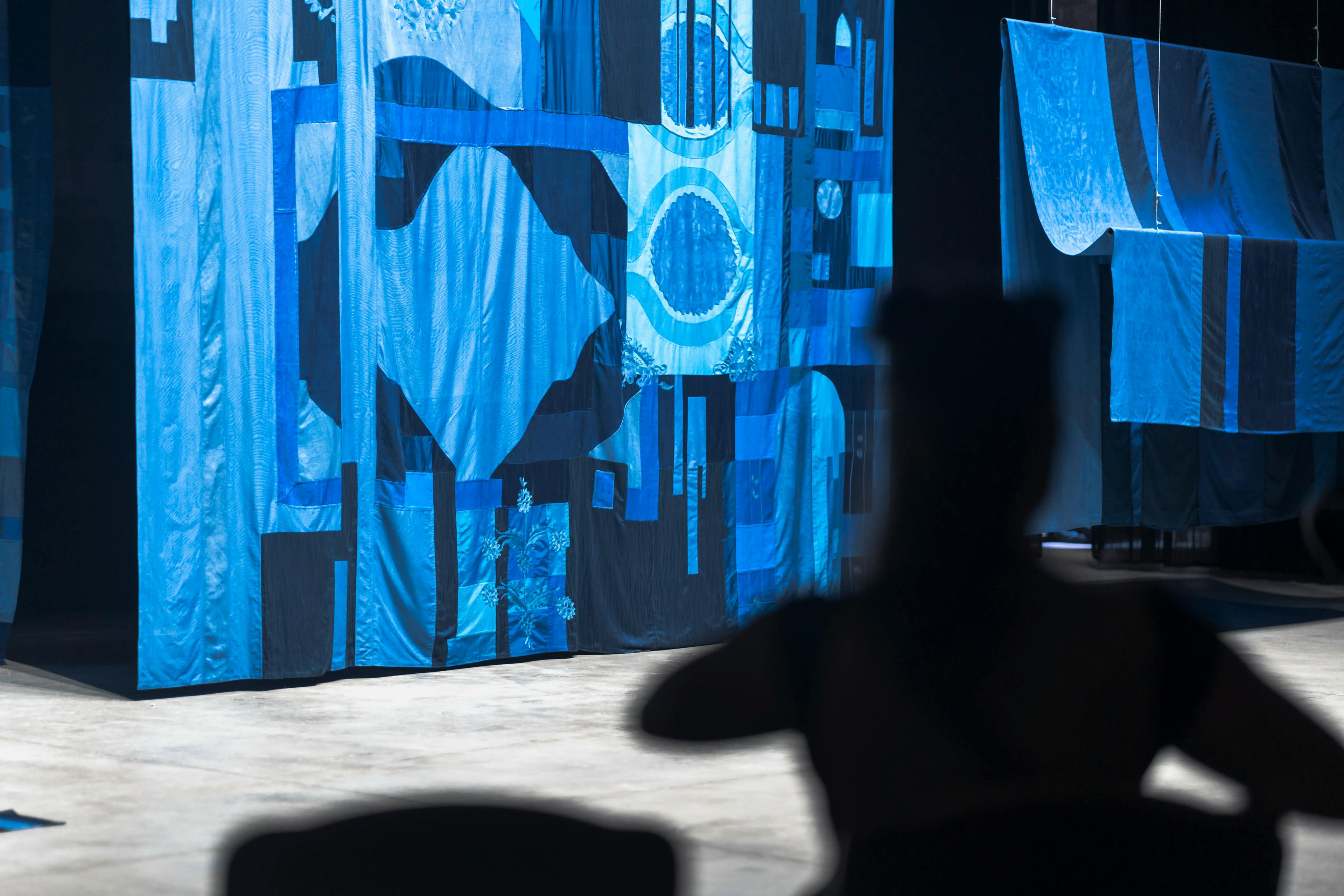
After visiting pavilions wrapped in dark atmospheres and subdued lighting, the Saudi Arabia Pavilion greets you with a bright, light-coloured environment that gently wakes up your sight. Here, the soft, diffused light encourages a slower pace and surrender to a calming experience.
Inside, a labyrinth of embracing corridors is created by walls of stretched fabric covering a structure; the surfaces, adorned with embroidered detail, draw your eye and invite close observation. Every element of the project is an invitation to discover, transforming the route into a visually rich journey full of meaning.
The pavilion offers a deep reflection on the human impact on the spaces we inhabit and the evolution of cities, inviting visitors to imagine a future where architecture and nature interweave harmoniously. An open and inclusive dialogue that goes beyond borders and cultures, tracing new paths for a sustainable and shared urban ecosystem.

Saudi Arabia Pavilion, Biennale Architettura 2025
To further improve your visit experience, here are some practical tips:
~ Outdoor exhibition spaces: During your Biennale visit, you may find yourself walking through uncovered areas. Be prepared for sunny, hot days, as well as for rainy spells.
~ Long walks: Visiting all the exhibition spaces will take many hours. Some areas may lack seating or rest areas, so you might find yourself walking for a long time during your visit.
~ Comfort while visiting: In some exhibition areas, there are gravel paths which may not be suitable for all types of footwear. Wearing uncomfortable shoes could negatively affect your experience.
~ Charging stations: As there are no dedicated charging areas, we recommend bringing a power bank so you can enjoy your visit and take as many photos as you like.
~ Beyond Giardini and Arsenale: Many National Pavilions and other collateral events are housed in magnificent historic buildings outside the main areas. Take the time to explore them as you discover the city’s history.
~ Entering the City of Venice: To visit the historic city centre, booking and payment of the Access Contribution is required, with some exceptions.
Check online for dates and visitor information.
We hope your visit to Venice will be unforgettable.
If you visit the projects, don’t forget to tag us using the hashtag: #ArtIsInTheProcess.
Giulia Barigelli
Communication Manager